
- Sourcing CNC machining? The test is not the tolerance printed on a brochure — it is whether the shop can hand you a CMM report for the exact feature you are buying, with the band, the sample size and the study window all named.
- What CNC machining is: a subtractive process — a cutter removes material from a workpiece along a programmed toolpath until the geometry, tolerance and surface finish on the drawing exist.
- Over 100 machines on one floor — Mazak / Brother / Tsugami / Star / Citizen class across 6,800 m², with 50+ 3-axis, 20+ 4-axis, 20+ 5-axis, 25+ lathes, 7+ grinders and 20+ inspection instruments.
- Measured, not claimed: ±0.003 mm on milling, ±0.002 mm on turning, ±0.002 mm on grinding, verified on Hexagon CMMs. Per-characteristic capability is Ppk ≥ 1.67 initial and Cpk ≥ 1.33 production (≥ 1.33 general). Reports name the feature, band, sample size, sigma method and window.
- ISO 9001:2015 · IATF 16949:2016 (design excluded) · ISO 14001:2015 — held by Dongguan Zhuohang Ltd, the entity that invoices you.
- Order terms: minimum order one piece, with 3-, 7- or 30-day lead times depending on how involved the part is.
What is a China machining factory?
A China machining factory is a Chinese plant that machines parts, in this case a 6,800 m² Dongguan facility with 100+ machines running since 2005 under ISO 9001:2015 and IATF 16949:2016. What separates it from a broker is what you can audit: the machine list, the certificates and the measured tolerances. Comparing factories on piece price alone misses most of the real cost, which is why this page works in buckets.
CNC machining is the subtractive manufacturing of parts on computer-numerically-controlled milling, turning, and grinding equipment. A cutter removes material from a workpiece along a programmed toolpath to produce a part that meets a drawing-defined geometry, tolerance, and surface finish. "CNC" means the tool path is numerically controlled rather than hand-operated.
The rest of this guide turns that definition into a buyer's checklist for this shop — what to verify before you commit, and how the numbers on the drawing actually reach the part.
The discipline separates into milling (the cutter rotates and the workpiece is fed; prismatic geometry), turning (the workpiece rotates and the tool is fed; rotational geometry), and precision grinding / wire EDM (the tightest tolerances on critical features). A plant that produces CNC machined parts end-to-end runs all three.
The output of CNC machining is a part that meets the drawing — geometry, tolerance, surface finish, and material certificate — and is documented to a quality plan (FAI for general work, PPAP for automotive-bound parts, IMDS for material data). That is the answer to "what is CNC machining": a numerically-controlled subtractive process that produces a part to a drawing, with the quality documentation that lets the part enter an assembly.
- Piece price — material, setup, machine time. The smallest, most-manipulated number.
- Tooling & fixturing — amortized over the run; a shop that reuses fixtures lowers it.
- Quality cost — inspection, Cpk, scrap, rework. A predictable process removes it.
- Freight & duties — landed cost, not the quote line.
- Inventory & lead time — capital tied up waiting for a 30-day lead.
- Cost of failure — a rejected batch, a stalled line, a recall. The bucket that dwarfs the rest.
This page is your guide to China machining factory. Zhuohang Precision Machining Factory holds milling to ±0.003 mm and turning to ±0.002 mm on China machining factory work, backed by 100+ Mazak, Brother, TSUGAMI and Sodick machines — read on for process detail, tolerance logic, and supplier verification.
Why is the piece price the wrong number to compare factories?

Because the piece price is the one number a supplier can manipulate without lying. A quote can be lowered by loosening a tolerance, substituting a cheaper alloy, skipping inspection, or outsourcing the finishing to an anonymous shop, and none of it shows on the line item. If you compare piece prices, you are comparing the part of the cost that is easiest to game, while ignoring the part that actually decides the outcome.
Total cost of ownership starts from a different premise: the part that lands on your dock, at the tolerance your drawing requires, on the date your line needs it, is the unit you are actually buying. Every cost between the raw quote and that finished, delivered, accepted part is part of the price, and a factory's capability, not its marketing, decides how large those costs are.
The piece price is a numerator with no denominator. The denominator is the number of parts you can actually use, out of the batch you paid for. A shop that holds tolerance and documents it keeps that denominator close to the whole batch; a shop that quotes low and ships loose makes the denominator collapse, and the cost per good part quietly climbs while the headline number stays flat. Comparing factories on piece price alone is like comparing aircraft on ticket price while ignoring which ones land.
The manipulation is not always dishonest; sometimes it is just incomplete. A supplier who quotes a looser tolerance because they cannot hold yours is not lying, but they are pricing a different part than the one on your drawing. The buyer who compares that number to an honest quote is comparing two different objects and calling it a decision. The fix is to price the part at the tolerance, material, and finish your drawing actually requires, and to hold the supplier to that with measurement, not with the quote line.
What are the eight buckets that make up the real cost?
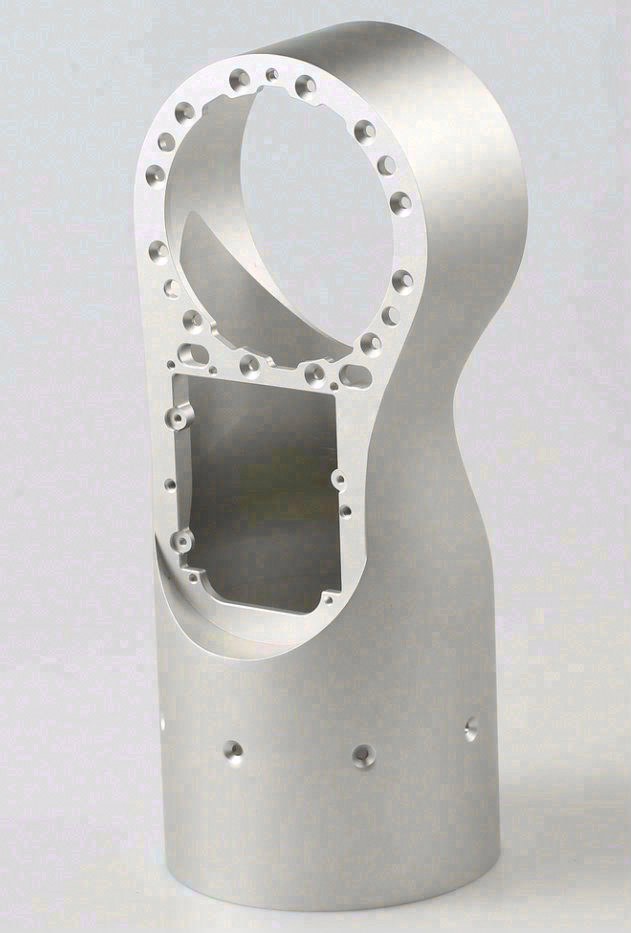
The real cost of a machined part splits into eight buckets. Most buyers only ever see the first one, which is why most sourcing decisions are made on the smallest and least informative number in the stack.
| Cost bucket | What drives it | How a good factory lowers it |
|---|---|---|
| Piece price | Material, setup, machine time | Right machine for the geometry, no reseller margin |
| Tooling & fixturing | New fixtures per part | Reusable fixturing, in-house design |
| Quality & inspection | Scrap, rework, CMM time | SPC at Ppk ≥ 1.67 initial, in-house CMM |
| Scrap & rework | Process instability | Predictable process, fewer rejects |
| Freight | Weight, origin, urgency | One accountable supplier, no cross-town handoffs |
| Duties & tariffs | Classification, origin | Correct HS classification, documentation |
| Inventory & lead time | Lead time, MOQ | 3 / 7 / 30-day tiers, MOQ 1 |
| Cost of failure | Rejected batch, line-down, recall | Certifications, traceability, first article |
The eight buckets are not independent; they trade against one another. Spend more on quality and the scrap and cost-of-failure buckets shrink. Shorten the lead time and the inventory bucket shrinks. A factory that understands these trades can show you a total that is lower even when its piece price is higher, because it is attacking the buckets that are actually expensive.
That is the whole point of the model: it turns a stack of separate expenses into a system you can optimize. The buyer who can see the trades can make them deliberately — paying a little more for prevention to collapse the failure bucket, or paying a little more for a shorter lead time to collapse the inventory bucket. The buyer who sees only the piece price is blind to those trades, and pays for them without ever choosing them.
Why is the cost of failure the bucket that dwarfs the rest?
A part that fails incoming inspection costs more than the part — it costs the air freight to replace it, the hour of a stalled assembly line, and in the worst case a customer who will not order again. The cost of failure is why a slightly higher piece price from a certified factory is usually the cheapest option: it removes the tail risk that a cheaper, unproven shop quietly prices in.
This is the single most important reframe in sourcing. The question is not "which factory quotes the lowest piece price" but "which factory has the lowest probability of a rejected batch, times the cost of that rejection." A shop with IATF 16949 process control, in-house CMM, and full traceability is not more expensive — it is pricing the job the way the job should be priced.
The failure bucket is also the one that compounds. A rejected batch is not one cost; it is a chain — the freight to replace it, the hour of a stalled line, the re-inspection of the replacement, and a customer who remembers. Each link is a cost the piece price never showed, and together they dwarf the other seven buckets. That is why if you ignore the cost of failure, you are not saving money; you are deferring it, at interest.
The asymmetry is the part to internalize: prevention is a small, fixed, known number, while failure is a large, unknown one. An SPC chart, a CMM pass, and an XRF check each cost a few minutes and a few dollars. The failure they prevent — the air freight, the stalled line, the lost account — costs orders of magnitude more and arrives at the worst possible time. If you pay a little more for prevention, you are buying down a tail risk, which is the cheapest thing you can buy in the whole stack.
How do tolerances and materials move the total cost?
Tolerance and material drive cost more than any other lever, and they cut both ways. A tight tolerance costs more to machine — slower feeds, sharper tooling, temperature-controlled measurement — but it prevents the far larger cost of a batch that fails incoming inspection or fails in the field. A substituted material saves pennies per part and can cost a program.
The discipline is to specify the tolerance the part actually needs, then hold the supplier to it with measurement. Our tolerances are ±0.003 mm on CNC milling, ±0.002 mm on CNC turning and ±0.002 mm for grinding, verified on Hexagon CMMs, and incoming material is XRF-checked against the mill certificate so the alloy you ordered is the alloy you receive.
The tolerance decision cuts both ways in a way most buyers underrate. A tolerance that is too tight is a premium paid on every unit for precision the part never uses; a tolerance that is too loose is a batch that fails incoming inspection and returns as air freight. The correct tolerance is the one the function actually requires — no tighter, no looser — and the correct way to buy it is to have the supplier prove it with a CMM report, not to hope the print was read carefully.
How does process capability (Cpk) become a cost number?
Cpk measures whether a process holds a dimension repeatably, and it converts directly to money. A process at Ppk ≥ 1.67 at the initial study on critical characteristics and Cpk ≥ 1.33 on general characteristics produces few defects, so little scrap, little rework, and few inspection failures. Capability is reported per characteristic: every report names the feature, its tolerance band, the sample size, the sigma method, and the study window. A process with no control produces a lottery, and you pay for the losing tickets.
We run SPC on key characteristics with a target of Ppk ≥ 1.67 initial (critical) and ≥ 1.33 (general); on a representative length characteristic (76.1–76.5 mm) the measured Cpk is 1.851 (one characteristic on one part, not a blanket capability claim). A predictable process costs a little more to run and removes the unpredictable cost of a rejected batch — the trade that makes TCO go down, not up.
Read the tolerance band before you read the index. Cpk is a ratio of the tolerance band to the process spread, not an absolute measure of accuracy. The figure above was recorded on a length characteristic with a 0.4 mm band (76.1–76.5 mm) — wide by design. Hold the same process spread against a ±0.005 mm feature and it fails outright. Ask for the band, the subgroup count and the sampling window on every capability number a supplier quotes.
Read Cpk as a defect-rate prediction, not a bragging point. As capability rises, the number of parts that fall outside the tolerance band falls off a cliff, which is why the difference between Cpk 1.0 and Cpk 1.67 is not a small improvement but a different order of failure. If you ask for the Cpk on your critical dimension, you are pricing the process the way a quality engineer would; if you skip it, you are leaving the scrap rate to chance.
How does lead time and MOQ show up in the cost?
Lead time is an inventory cost. A 30-day lead means 30 days of working capital tied up in parts you have not received; a 3-day lead means almost none. And MOQ is a risk cost: a one-piece minimum lets you validate a design on a single part before committing to volume, capping your downside on a bad decision, while a high minimum forces a large first buy before the process is proven.
Our lead times are tiered by complexity — roughly 3, 7, or 30 days depending on process steps — and the MOQ is one piece. Both are levers that reduce your total cost by reducing the capital at risk.
Read lead time as a financing term. A supplier that ships in three days hands you back nearly a month of working capital compared with a 30-day lead, and that is money you can hold for the next order instead of parking in a container in transit. A lead time you can trust is a scheduling asset; a lead time that slips is a line-down waiting to happen.
How do you get a TCO-accurate quote instead of a piece price?
Ask for the quote the way you would audit it. Send a drawing with material, tolerance, and quantity, and require the response to separate the cost buckets: piece price, tooling, finishing, inspection and certification, and lead time. Then ask the three questions that expose the hidden buckets — what tolerance is quoted, who owns the finishing, and what documentation ships with the parts.
Red flags that signal hidden cost: a quote before a drawing; a tolerance quoted looser than your print; finishing "outsourced" without a named partner; no inspection report offered; a price far below the field with no explanation.
A TCO-accurate quote is longer than a piece price, and that is the point — it prices the part the way it will actually cost you, not the way it looks best in a comparison table.
How does material grade move the total cost, and where do buyers overpay?
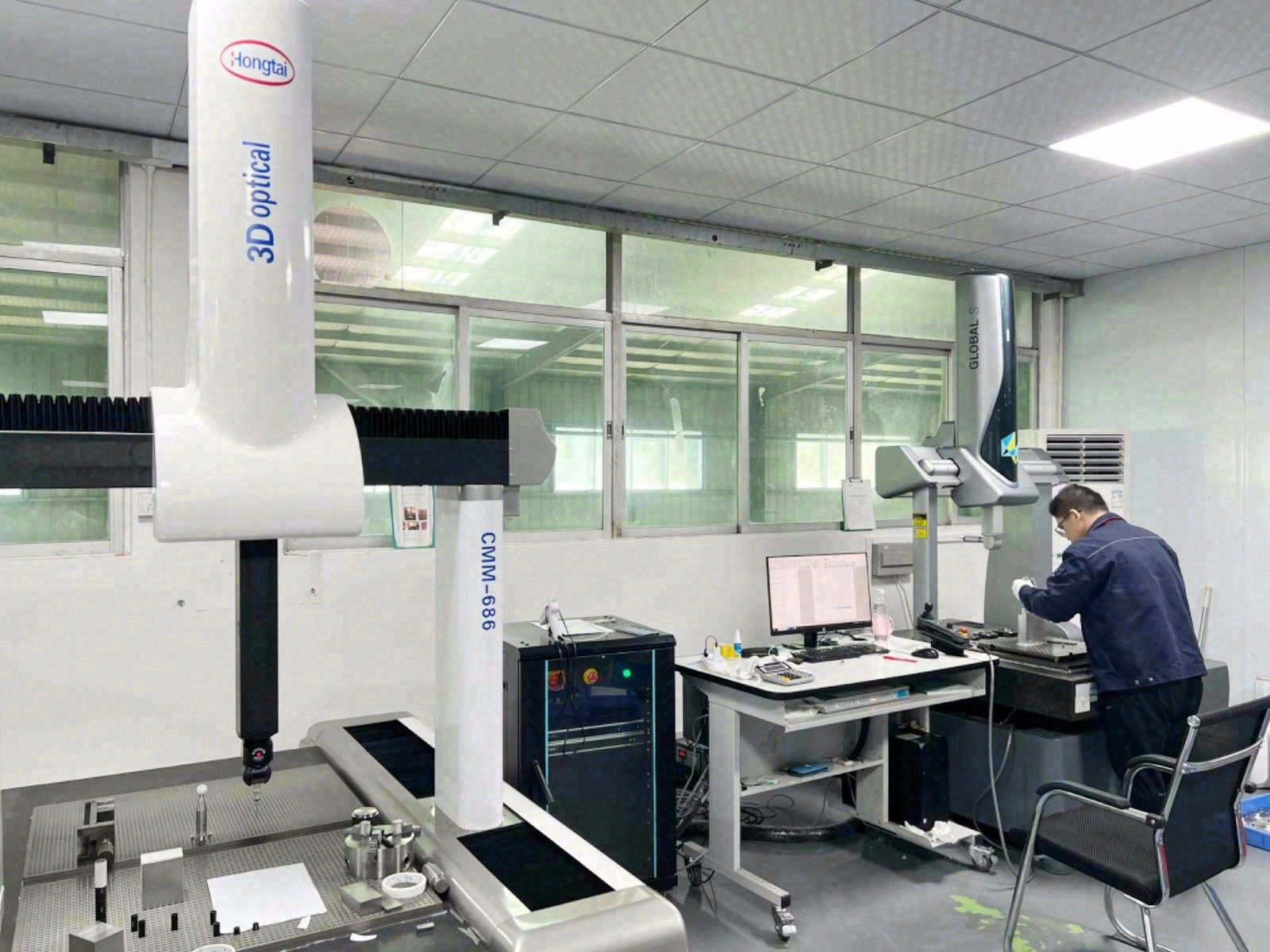
Material is the biggest single lever on a machined part's cost, because it drives both the raw stock price and the machining speed. The grade you specify sets the floor on cost and the ceiling on performance. A drawing that demands stainless where aluminum would function is paying for corrosion resistance the part never uses, and paying for it in machine time, not just in stock.
| Material | Typical density | Typical yield strength | Why buyers pick it |
|---|---|---|---|
| 6061-T6 aluminum | 2.70 g/cm³ | ~276 MPa | General-purpose, corrosion-resistant, anodizes well |
| 7075-T6 aluminum | 2.81 g/cm³ | ~503 MPa | Aerospace-grade strength at a premium |
| 5052 aluminum | 2.68 g/cm³ | ~193 MPa | Marine and sheet-metal corrosion resistance |
| 304 stainless | ~8.0 g/cm³ | ~215 MPa | General corrosion resistance, food and structural |
| 316 stainless | ~8.0 g/cm³ | ~290 MPa | Chloride resistance for marine and medical |
| 4140 alloy steel | 7.85 g/cm³ | ~655 MPa (Q&T) | High strength and wear, heat-treatable |
The overpaying happens when the grade outruns the function. Stainless where aluminum works, aerospace alloy where a general grade suffices, a heat-treated steel where a mild steel carries the load — each of those is a premium you pay on every unit, forever. The buyer who knows the material trade-offs can specify the grade that earns its keep, and keep the difference in the landed cost instead of in the stock room.
How does machinability price a part before you negotiate?
Machinability is a published property of a material, and it prices a part more reliably than the raw stock does. The easier a grade cuts, the faster the spindle turns, the longer the tool lasts, and the fewer setups a batch needs. A free-machining grade lowers the per-unit cost through machine time and tool wear — not through the price of the billet — and that saving compounds across a production run.
| Material family | Machining behavior | Per-unit cost effect |
|---|---|---|
| Free-machining brass (C360) | Chips break cleanly; fine threads run fast | Lowest machining cost per part |
| Aluminum (6061 / 7075) | Fast feeds, good heat dissipation | Low cost per part; the default choice |
| Low-carbon / leaded steel | Predictable chip, moderate tool wear | Mid-range cost; workhorse material |
| Stainless (303 / 304 / 316) | Work-hardens as it cuts; slower feeds | Higher cost per part; 303 helps |
| Titanium (Grade 2 / 5) | Retains heat at the edge; low feeds | Slowest to cut; priced for function |
None of this appears on the stock price line, but all of it appears in the per-unit cost. Read machinability as a cost curve, not a label, and let it be a stated factor in the material decision rather than a surprise on the invoice.
How do ISO 2768 tolerance classes translate into cost?
ISO 2768 is the standard for general tolerances on dimensions without an individual callout. It grades them as fine (f), medium (m), coarse (c), and very coarse (v), and the grade you pick is a cost decision, because the shop must control its whole process to the finer band even on features that do not need it.
| Class | Meaning | Cost effect |
|---|---|---|
| Fine (f) | Tightest general tolerance | Process control on every dimension; highest cost |
| Medium (m) | Standard workshop precision | The balanced default for most machined parts |
| Coarse (c) | Looser, non-critical | Lower cost; for clearance and cosmetic features |
| Very coarse (v) | Rough, non-functional | Cheapest; rarely used on machined parts |
The money mistake is over-specifying. A drawing marked ISO 2768-f everywhere forces fine process control on a bracket that only needs medium, and you pay that premium on every unit, forever. Specify the class the function needs, and hold the shop to it with measurement, not the reverse.
How does surface roughness (Ra) trade against machining cost?
Surface roughness is measured in Ra (micrometres), and each step down the scale costs machine time. The rough 3.2 µm surface comes off a standard cut; 1.6 µm needs a controlled finish pass; 0.8 µm usually requires grinding or fine finishing; 0.4 µm and below is a polished or ground surface reserved for sealing and bearing faces. A part that calls out 0.8 µm across its whole surface is paying a grinding price for surfaces that will never touch anything.
| Ra target | How it is produced | Typical use |
|---|---|---|
| 3.2 µm | Standard machining cut | Non-critical surfaces, clearances |
| 1.6 µm | Controlled finish pass | General machined parts |
| 0.8 µm | Fine finish or grinding | Sealing and locating faces |
| 0.4 µm and below | Grinding, honing, polishing | Bearing seats, dynamic seals |
The discipline mirrors tolerance: specify Ra only where the function demands it, and put the finishing budget on the surfaces that actually meet another part.
How do milling, turning, and grinding split the cost differently?
Each process prices the same material differently, because each cuts the geometry in a different way. Milling is the default for prismatic parts — housings, brackets, plates — and its cost is driven by the number of setups and faces. Turning is the natural choice for round parts, and it is usually cheaper per part than milling the same geometry from bar stock because the material removal is continuous. Grinding is the finishing process for the tightest surfaces, and it is the most expensive per square millimetre, so it belongs only on the dimensions that need it.
| Process | Best fit | Cost behavior |
|---|---|---|
| CNC milling | Housings, brackets, prismatic parts | Cost driven by setups and faces |
| CNC turning | Shafts, pins, bushings, round parts | Low per-part cost on bar stock |
| Mill-turn | Complex parts with both features | Fewer setups, less handling |
| Precision grinding | Bearing seats, roundness-critical surfaces | Highest per-area cost; use only where needed |
Choosing the right process for the geometry is a cost decision made at the drawing, not the quote. A mill-turn center that does in one clamping what a mill and a lathe do in two removes a setup, a hand-off, and the stack-up error between fixturings, and that is money that stays in your pocket. The same part, run on the wrong process, carries extra setups, extra handling, and extra chances to go out of tolerance.
Which DFM rules cut cost without cutting function?
Design-for-manufacturing is where a part's cost is decided before it reaches a machine. The rules below are standard practice, and a shop that flags them early saves you more than one that agrees to everything and charges for the trouble later.
- Radius internal corners — a rotating tool cannot cut a square internal corner; leave a radius at least the tool radius, or the part needs extra setups or EDM.
- Keep hole depth to about 4× the diameter — deeper holes need peck drilling, special tooling, and slower cycles.
- Keep wall thickness above about 0.8 mm in metal — thinner walls chatter, distort, and cost rework.
- Avoid deep narrow pockets — a pocket deeper than roughly 4× its width needs long-reach tools that flex and break.
- Hold tight tolerance only on functional features — a blanket ±0.003 mm (milling) / ±0.002 mm (turning) across a whole print is a premium you pay on every unit.
DFM is not a constraint on your design; it is a constraint on your cost. A drawing that respects these rules machines faster, rejects less, and ships sooner, and the savings show up across all eight cost buckets at once.
How do Incoterms and freight turn a piece price into a landed cost?
Incoterms define who owns the risk and the freight at each point between the factory and your dock, and that allocation is a cost decision hiding inside the delivery terms. Under EXW you carry the risk from the factory gate; under FOB the seller loads it on the vessel; under CIF the seller pays freight and insurance to the port; under DAP or DDP the seller carries it further, with DDP including the import duties. Each term moves the risk boundary, and the risk boundary is a line item in your total cost.
The point is not to memorize the terms but to price the hand-off. A piece price quoted EXW is not comparable to one quoted DDP, because one of them quietly leaves freight, insurance, and duty on your side of the ledger. A TCO-accurate quote states the Incoterm and the freight leg explicitly, so the landed cost is visible instead of split across three documents.
The same discipline applies to the documentary side of an international order. Correct HS classification and complete paperwork keep a shipment moving through customs instead of sitting in a warehouse accruing demurrage — a cost that never appears on a quote but lands squarely in the freight and duties bucket. A factory that has shipped internationally for years has this worked out, and that experience is part of the total cost you are buying.
Where does the TCO model break down, and what do suppliers hide?
The TCO model is only as honest as the inputs, and every input is a place a supplier can hide cost. The failure modes are predictable: a tolerance quoted looser than the print, a material grade left unspecified, a finishing step outsourced without a named partner, a lead time that does not include the finishing queue, and a piece price that quietly assumes a material substitution. Each of these keeps the headline number low while moving cost into the buckets you are not looking at.
The red-team question to ask is: what happens when this part is wrong? If the answer involves chasing a chain of unnamed subcontractors, the TCO model has a hole in it. The factory that can answer the failure question in one sentence — who owns it, how it is contained, what it costs to fix — is the one whose total cost you can actually price. The one that cannot is pricing a bet you do not want to place.
How do you audit a factory's total cost from your desk?
A factory's total-cost profile can be read before you ever send a drawing, from the documents a real factory already keeps. The checks below convert a marketing claim into a cost estimate, and they take an afternoon.
- The registration number — 91441900MA4UWT6X39 — and whether it traces to one legal entity with one address.
- A live video call of the floor — the machines, the metrology bench, and the actual 6,800 m², not stock photos.
- Which machines will run your part — brand and count, matched to the tolerance your drawing calls out.
- The certificate numbers and their scope — including any exclusion, such as the Clause 8.3 design exclusion on IATF 16949.
- An SPC chart with the Cpk for your critical dimension, not a hand-picked sample that happened to look good.
- An XRF or material report on your alloy — evidence the material you pay for is the material you get.
How do the eight buckets behave at 1, 100, and 10,000 pieces?
The same part costs a different way at prototype, pilot, and production volume, because the buckets shift their weight. At one piece, the tooling and setup dominate — a fixture and a program amortized over a single part can cost more than the material and the machine time combined. At 100 pieces, the setup spreads thin and the material and machine time take over. At 10,000 pieces, the marginal cost per part is almost all material, machine time, and scrap rate, and a tenth of a penny in process waste becomes a line item.
The TCO model does not change with volume; the weights inside it do. That is why a factory that is cheap at one piece is not necessarily cheap at ten thousand, and why you should price the part at the volume they will actually order, not the volume they imagine. A shop optimized for prototype runs has a different cost curve than one optimized for production, and the difference shows up in which bucket grows first when volume climbs.
Read the volume question as a repeat-order question. The first order pays for the learning; the repeat order should cost less because that learning is banked. A shop that keeps your fixture, program, and inspection plan on file reproduces the part without re-learning it, which holds the per-unit cost stable as volume grows. A shop that loses that continuity charges you for the learning again — in the price, or in a slower ramp-up and the scrap that comes with it.
How do you compare two quotes on total cost, line by line?
Two quotes for the same drawing are only comparable when they name the same things. Put them side by side and force each to fill the same columns: material grade, tolerance held, in-house versus outsourced steps, tooling amortization, lead time, Incoterm, and the documentation that ships. The cheaper number usually stays cheap by leaving one of those columns blank, and the blank column is where the hidden cost sits.
| Quote line to check | What the cheaper quote often hides | What to demand instead |
|---|---|---|
| Material | Grade left unspecified | The exact alloy and a mill certificate |
| Tolerance | Looser than your print | The tolerance on your critical dimensions |
| Finishing | Outsourced, unnamed | A named partner or in-house proof |
| Tooling | Buried in the piece price | A line item you can see and reuse |
| Lead time | Excludes the finishing queue | A date for the finished, shipped part |
| Delivery | EXW, freight on you | The Incoterm stated, landed cost visible |
The comparison is not a spreadsheet exercise; it is an honesty test. A quote that survives the side-by-side is priced the way the part will actually cost you. A quote that collapses under it was never a cheaper part — it was a cheaper promise.
How does a first article fit into the total cost model?
A first article is one measured part that proves the process before you commit to volume, and it is the cheapest insurance in the entire TCO stack. For the cost of a single part and its inspection report, you learn whether the factory can hold your tolerance, whether the material matches the mill certificate, and whether the finishing came back the way you specified — before you write the production order.
The first article converts a piece price into a total cost you can trust, because it replaces a supplier's claim with a measurement. Send a real drawing, have the part machined, and measure it on your own CMM against the factory's dimensional report. The gap between your measurement and theirs is your true measure of the supplier, and it is the gap the cost of failure lives in. A shop that welcomes your independent check is a shop that can stand behind its numbers; a shop that resists it is pricing in the risk it is hiding.
What does the total cost look like across industries?
The same eight buckets apply everywhere, but each industry weights them differently, and you should know which bucket their industry cares about most. Automotive weights the cost of failure and the documentation: a line-down at an OEM is measured in minutes of stopped production, so PPAP, SPC, and traceability dominate the decision. Robotics weights lead time and design iteration, because a prototype that takes 30 days delays the whole program. Medical weights material verification and traceability, because a substituted alloy or a lost lot record is a regulatory event, not just a quality one.
| Industry | Dominant bucket | Why it leads |
|---|---|---|
| Automotive | Cost of failure + documentation | Line-down cost, PPAP and traceability requirements |
| Robotics | Lead time + iteration speed | Prototype cadence drives the program schedule |
| Medical | Material verification + traceability | Alloy and lot records are regulatory, not optional |
| Electronics / automation | Inventory + lead time | Fast product cycles, tight assembly schedules |
The factory that wins in one industry does not automatically win in another, because the bucket that matters is different. You should match the factory to the bucket their industry weighs most, and that is a total-cost decision, not a piece-price one.
How does in-house capability change the total cost versus a trading chain?
The single largest difference between a factory and a trading company is who owns the process. A trading company quotes the same part at the same piece price but must pay a workshop to make it, a subcontractor to inspect it, and a forwarder to stage it — each layer adding a margin and a point where responsibility dissolves. When the part is wrong, you chase several parties instead of one. The factory model removes those layers by owning the floor, the instruments, and the paper trail, so the same piece price from a factory and from a middleman are not the same total cost.
The second-order effect is what most buyers miss. A factory that owns its metrology catches a drift in minutes, on the same floor as the machine that caused it; a chain discovers it days later, after the part has moved through two subcontractors and a forwarder. A factory that owns its finishing keeps the hand-off off your invoice; a chain adds a margin at every link. The hand-offs are not free — they are the cost of failure waiting to happen, distributed across the people who do not own the outcome.
That is why the identity of the supplier is a cost input, not a formality. A verifiable single entity with one address and one accountable owner is the structural fix for most of the hidden buckets. The buyer who verifies the factory before quoting is pricing the part the way it will actually behave; the buyer who does not is pricing a chain of promises.
How does traceability turn a recall into a contained fix?
When a defect surfaces, the cost is set by how precisely you can isolate it, and that is a traceability question. A factory whose MES/ERP records material source, process parameters, machine, batch, operator, and inspection results for every lot can trace a non-conformance to the exact lot, machine, and operator. That turns a failure into a containment event: quarantine one lot, fix one process, and move on.
Without that record, the same defect is a recall: you pull every shipped part, re-sort them, and answer to your own customer for the ones already in the field. The difference between containment and recall is the difference between a cost you can absorb and a cost that absorbs you. For automotive and medical buyers the record is mandatory; for everyone else it is the cheapest insurance in the failure bucket.
Traceability also reaches backwards to the raw material. Incoming stock is XRF-checked against the mill certificate, so a substituted or mislabeled alloy is caught at the receiving door rather than discovered on your dock. A material record that runs from the mill to the finished part is what lets a buyer trust the alloy they paid for, and that trust is a cost saving, not a nice-to-have.
What is the second-order cost of switching suppliers?
The total cost of ownership does not end at the dock — it extends to the next order. Switching suppliers resets the learning curve: a new shop must re-interpret the drawing, re-prove the program, re-tool the fixture, and climb the scrap curve your current supplier already climbed on your earlier orders. That reset is a real cost, and it lands on your first batch with the new shop, whether the quote admits it or not.
A stable supplier relationship is itself a cost asset. A shop that keeps your fixture, program, and inspection plan on file reproduces the part without re-learning it, which holds the per-unit cost flat and the lead time short. A shop that loses that continuity, or if you switch on a one-cent piece-price difference, you pay the learning cost again. When you compare quotes, price the switch: the cheapest new supplier is often more expensive than a slightly pricier incumbent once the learning curve is added back in.
How does the machine fleet read as a cost map?
A machine list with brands and counts is a cost map, if you know how to read it. The brands tell you about repeatability: a Mazak multi-task center, a Brother drill-tap center, a Tsugami or Citizen sliding-head lathe, and a Sodick-class grinder each hold tolerance on a specific geometry. The cost value of those names is not prestige — it is the reduced scrap and rework that comes from a spindle that repeats, a tool changer that does not drift, and a control that holds a feed rate under load.
The counts tell you about scheduling, which is a lead-time and inventory cost. A shop with 50+ 3-axis centers can slot your prototype without displacing production, which keeps lead time short and capital off the floor. A shop with one machine quotes your part against a queue, and the queue is a cost you carry, not a cost they show. The grinding machines deserve the same reading: 7+ grinders holding ±0.002 mm mean a factory that owns its finishing, not one that rents it from a specialty shop at a margin.
Read the list as prevention in hardware form. Each named capability is a cost of failure the factory has already absorbed into its own floor, instead of passing downstream to your dock. If you read the fleet this way, you are pricing prevention, not buying promises.
How do you write a drawing that prices itself honestly?
The cheapest part is designed before it is quoted, and the drawing is where that happens. A drawing that specifies the material grade it needs, the tolerance only on the features that need it, the Ra only on the surfaces that touch, and an ISO 2768 class that matches the function is a drawing that prices itself honestly, because the shop can machine it fast, reject little, and pass the saving back to you.
A drawing that does the opposite prices itself expensively, in every bucket. A blanket ±0.003 mm (milling) / ±0.002 mm (turning) across the whole print is a premium paid on every unit. Stainless where aluminum would function is corrosion resistance paid for in machine time. A 0.8 µm callout on a surface nobody touches is a grinding price on a cosmetic face. Each of those is not a design decision but a cost decision, and the buyer who treats them as such is already ahead before the first quote arrives.
The honest drawing is also the auditable one. When the tolerance, material, and finish are explicit, a quote can be checked against them line by line, and a supplier cannot hide a looser tolerance or a substituted alloy in the whitespace. That explicitness is what turns a piece price into a total cost you can actually compare.
What this shop actually runs
A buyer asking for capability evidence should get a specific answer. The facility behind this guide operates 100+ CNC machines across a 6,800 m2 plant in Dongguan, China, with 100+ staff. The machine list by category:
- 5-axis machining centres (10+) - Mazak VARIAXIS I-600 (510/910/510 mm travel, 12,000 rpm, 22 kW, 71.6 N·m, 30-tool BT40) and Mazak INTEGREX I-250H S (B-axis 0.0001°, 24 kW, 124 N·m, 38-tool HSK-A63). Typical work: compound-angle parts, single-setup multi-face prismatic work, and aerospace fittings where datum transfer loss is unacceptable.
- 3-axis / 4-axis machining centres (50+) - Brother SPEEDIO S500Z2N / S700Z2N (10,000 rpm, 14/21-tool ATC, 0.7 s tool-to-tool, Z-axis 2.2 G) and Mazak VCE-430A L / VCE-570C L (10,000 rpm, 118 N·m, 24-tool ATC). Typical work: prismatic parts, plates, brackets, housings.
- Swiss-type turning centres (10+) - Citizen Cincom A20-3F7 (Φ20 mm, 10,000 rpm), TSUGAMI B0206-III / B0205-III (Φ20 mm, 0.1 µm), STAR SR-32JII / SR-32J Type N (Φ32 mm, 8,000 rpm). Typical work: long, slender rotational parts at ±0.002 mm.
- CNC turning centres (20+) - HEADMAN T70M/1250 (720 mm swing, 117 mm bore, 3,000 rpm, BMT75 12-station turret). Typical work: shafts, bushings, flanges up to ±0.002 mm.
- Wire EDM (5+) - Sodick AQ535L (550/350/300 mm travel, ±20° taper, 800 kg workpiece). Typical work: hardened tool steel, internal splines, sharp internal corners that milling cannot reach.
- Inspection: Hexagon CMM + 20+ gauges - Hexagon CMM for coordinate measurement, plus vision system, profilometer, hardness tester, coating thickness gauge, XRF for material verification. The 10:1 rule (gauge 10x more accurate than the band) is applied to every feature.
- Machine highlights - VARIAXIS I-600: one-setup multi-face 5-axis + MAZA-CHECK auto-calibration; INTEGREX I-250H S: DONE-IN-ONE mill-turn, B-axis 0.0001° + Ai thermal shield; SPEEDIO S500Z2N / S700Z2N: Z-axis 2.2 G + 0.7 s ATC; Swiss-type: guide-bush switchable + 0.1 µm resolution.
Tolerance bands held: ±0.003 mm on CNC milling, ±0.002 mm on CNC turning, ±0.002 mm on precision grinding and wire EDM. Capability indices: Ppk >= 1.67 initial on key characteristics; Cpk >= 1.33 ongoing in production.
Certifications: ISO 9001:2015 (116024/A/0001/UK/En), IATF 16949:2016 (131941/A/0001/SM/En, design clause 8.3 excluded - disclosed openly), ISO 14001:2015 (116024/B/0001/UK/En). Certificates are issued to Dongguan Zhuohang Ltd (USCC 91441900MA4UWT6X39, established 2005).
Service area: Austria, Belgium, the Czech Republic, Denmark, France, Germany, Greece, Hungary, Ireland, Italy, the Netherlands, Spain, Sweden and the United Kingdom in Europe; Brazil, Canada, Mexico and the United States in the Americas; China, Israel, Japan, Singapore and Sri Lanka in Asia; Australia and New Zealand in Oceania; and South Africa in Africa. Based in China, serving customers worldwide.
Contact: Felipe Iglesias, [email protected], +86 13126536955.
Price the whole part, not the piece.
Send your drawing to [email protected] or call +86 13126536955 for a quote that separates piece price, tooling, finishing, inspection, and lead time — a total cost you can actually compare.
Frequently Asked Questions
What is the total cost of ownership of a machined part?
In short, TCO is the sum of piece price, tooling, quality and scrap, freight, duties, inventory carrying cost, and the cost of failure such as a rejected batch or line stoppage. The piece price is usually the smallest and most easily manipulated of these, not the whole story.
Why is the cheapest piece price usually the most expensive part?
In short, A low piece price often hides a looser tolerance, a substituted material, or a shop with no in-house metrology — costs that surface later as rejected batches, air freight, or field failures. The true cost is the landed cost at the tolerance your drawing requires, not the headline number.
How do tight tolerances affect total cost?
In short, Tight tolerances cost more to machine — slower feeds, more inspection, temperature control — but they prevent the far larger cost of a batch that fails incoming inspection or fails in the field. A tolerance held to ±0.003 mm (milling) / ±0.002 mm (turning) with CMM proof is usually cheaper in total than a loose claim.
What hidden costs do buyers usually miss?
In short, Tooling and fixturing, scrap and rework from an unstable process, freight and duties, inventory tied up in long lead times, and the cost of a line-down or recall if a batch is wrong. A TCO model prices these explicitly instead of discovering them later.
How does a small MOQ lower total cost?
A MOQ of one piece lets you validate a design on a single part before committing to volume, which caps your downside on a bad decision. A high minimum forces you to buy a large first batch before the process has been proven.
How does process capability (Cpk) reduce cost?
A process running SPC at Ppk ≥ 1.67 initial produces fewer defects, so less scrap, less rework, and fewer inspection failures. That predictable process costs a little more to run but removes the unpredictable cost of a rejected batch.
How does material grade move the total cost?
In short, Material drives both raw stock price and machinability. A free-machining grade cuts faster and wears tools less, so the per-unit cost drops through machine time, not just billet price.
How do ISO 2768 tolerance classes affect cost?
In short, ISO 2768 grades general tolerances as fine (f), medium (m), coarse (c), and very coarse (v). The finer the class, the more a shop must control its whole process, so a drawing that over-specifies fine tolerances pays for precision the part never uses.
How does surface finish (Ra) trade against cost?
A rough 3.2 µm surface comes off a standard cut; 1.6 µm needs a controlled finish pass; 0.8 µm usually needs grinding. Each step down in Ra adds machine time and cost, so Ra should be specified only where the function requires it.
Do you use MIL-STD-105E or ANSI/ASQ Z1.4 sampling inspection?
In short, MIL-STD-105E is the U.S. military sampling inspection standard published in 1989; it specifies acceptable quality limit (AQL) sampling plans for lot-by-lot inspection.
Standards referenced on this page
- ASTM B211/B211M-19 — Standard Specification for Aluminum-Alloy Rolled or Cold Finished Bar, Rod, and Wire
- ASTM A276/A276M-17 — Standard Specification for Stainless Steel Bars and Shapes
- ISO 9001 — Quality management systems — Requirements
Top 10 reasons to choose Zhuohang as your best China Machining Factory
There are ten questions every serious buyer asks a China Machining Factory before committing. Here is how this shop answers each, backed by the plant and the paperwork.
- One part is welcome. Prototype and production share the same program and datum, so the sample you approve is exactly what ships when the order scales.
- 48-hour quote with DFM. We flag the changes that cut the cost of your CNC Machining part before any metal is cut, so the invoice never surprises you.
- A factory you can visit. Behind the parts is a 6,800 m² floor in Hengli, Dongguan, trading as Dongguan Zhuohang Ltd (USCC 91441900MA4UWT6X39) since 2005.
- No duty surprises. Material certs travel with each shipment, and Section 301 / Section 232 and EU CBAM status stays current on our HS codes.
- Real tolerances. ±0.003 mm on milling, ±0.002 mm on turning, ±0.002 mm on grinding and wire EDM — measured to these, not merely quoted.
- Certified end to end. The same floor holds ISO 9001:2015, IATF 16949:2016 (design excluded) and ISO 14001:2015, so a CNC Machining sample and an automotive run share one standard.
- Seven languages. English, Japanese, Portuguese, Spanish, French, Chinese and Cantonese — your drawing is answered in the language it was sent.
- Everything under one roof. Milling, turning, mill-turn, grinding and wire EDM share one floor and one quality system, so your CNC Machining parts never stall between vendors.
- Gear you can look up. The floor runs a Mazak VARIAXIS I-600, a Mazak INTEGREX I-250H S, plus Tsugami, Star and Citizen Swiss lathes for the fine work.
- SPC you can read. Every lot passes Hexagon CMM and vision checks, with Ppk ≥ 1.67 initial and Cpk ≥ 1.33 production figures, each noting index, stage and sigma method.
Ready to test any of the ten yourself? Send a drawing for a 48-hour quote, or contact the team in English, Japanese, Portuguese, Spanish, French, Chinese or Cantonese.