
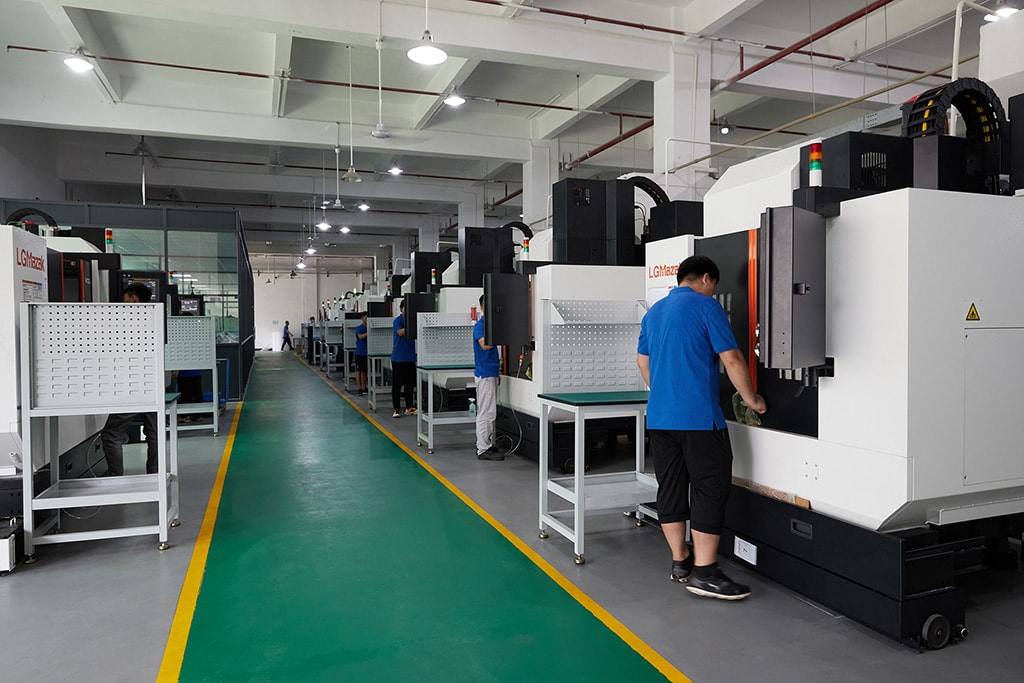
A machining quote is not a single number; it is an invoice for a chain of resources - the material, the machine hours, the engineering behind the program, the finishing, the inspection, and the freight. When buyers treat the total as one figure and negotiate it, they leave the real levers untouched. When they read the quote as a structure, they can see which lines are fixed by physics, which are choices made in the drawing, and which are margins added by the supply chain between the factory and the buyer.
This guide walks through the anatomy of a factory-direct machining price in 2026, line by line. The goal is not to predict what your part will cost - that needs the drawing - but to give you the structure to read any quote, the questions to ask about each line, and the design levers that move the total without weakening the part.
1. What does a machining quote actually pay for?
Every machined part quote resolves into a handful of cost families. The material is the obvious one, but around it sit the machine time that cuts the part, the setup and programming that prepare the run, the finishing that treats the surface, the inspection that proves the result, and the overhead and margin that keep the factory alive. A quote that does not show these families is hiding information, not saving it.
The proportions shift with the part. A small simple part in a common alloy spends most of its price on setup and minimums, because the actual machining is minutes. A large part cut from an expensive blank spends most of its price on material and machine hours. Knowing which family dominates your part tells you which lever to pull - negotiate the minimums on a small part, or attack the material specification on a large one.
The practical request is for an itemized quote. Ask the factory to split the number into material, machining, finishing, and tooling, and to state the freight term separately. The split is not just transparency; it is the raw material for comparing suppliers, because two quotes for the same drawing should agree on the physics even when they disagree on the total.
2. Why does material appear twice in the price?
Material shows up once as the cost of the raw stock and again as the cost of the chips that are cut away. When a part is machined from a solid block, most of the purchased material never reaches the finished part - it becomes swarf - and the buyer pays for the whole blank, not just the material in the final geometry. That is why the shape of the part matters as much as its weight.
The grade and the section drive the material price in opposite directions. A common grade in a stocked bar or plate size is inexpensive and quick to source. A special alloy, a large section, or a certified lot carries a premium and a longer lead. Where the drawing can accept a stocked section or a slightly different grade, the material line drops without any change to the part's function.
Buyers should ask what the raw section actually is. If the factory is cutting a 100 mm blank to make a 40 mm part, the waste is real and priced. If the design could start from a closer-to-net form - a smaller section, a tube instead of a bar for a hollow part, or a forging for a high-volume shape - the material line shrinks, and on some parts that line is the biggest one in the quote.
3. What does machine time really cost, and why does it vary?
Machine time is priced by the hour, and the rate depends on the machine class and the market. A standard three-axis center runs at a lower rate than a five-axis machine, and a turning center rates differently from a mill. The rate covers the machine, the operator, the tooling consumed, the power, and the floor space - so a part that ties up an expensive machine for hours carries those hours at the expensive rate.
The buyer's lever on machine time is not the rate, which is set by the market, but the hours, which are set by the process. A part whose features are reachable in one setup costs less machine time than the same part needing a second operation. A geometry that lets the tool cut aggressively - thick enough walls, accessible features, no deep corners - cuts faster than one that forces light passes. The drawing sets the hours.
The quote should show the estimated cycle time per part and the setup time for the run. Dividing the machining line by the quantity reveals the per-part hours, and comparing those across suppliers exposes who plans a more efficient process. Two factories with identical rates can quote different totals because one has planned the part better, and the better plan is the one you are actually buying.
4. Where do setup and programming land on a small batch?
Setup and programming are fixed costs - they happen once per order, not once per part - and on a small batch they dominate the unit price. Writing the program, preparing the fixture, and proving the first article can take longer than cutting the entire order, and that engineering time is real money. A quote for five pieces carries that weight across five parts; a quote for five hundred carries it across five hundred.
This is why the unit price falls so steeply between one piece and a small run. The fixed costs stay roughly constant while the denominator grows, so the second part is dramatically cheaper than the first, and the tenth cheaper still. The curve flattens as the fixed costs fade and the variable costs - material and machine time - take over.
The commercial lesson is to separate the fixed from the variable when you compare quotes. Ask what the setup and programming add to the order, and ask whether a repeat order of the same part will carry that cost again. A factory that reuses the program and fixture on the next release should quote the repeat lower, and a supplier that does not is charging you for engineering twice.
5. Which finishing line moves the quote the most?
Finishing is often the most volatile line in a machining quote, because the same words can mean different processes. As-machined costs nothing beyond the cutting. Bead blasting adds a small step. Anodizing on aluminum spans a wide range - clear anodize is modest, while hard anodize with thickness verification costs several times more. Plating and specialized coatings sit higher again, and each runs in batches that carry their own minimums.
The volatility comes from assumption. When the drawing says smooth or the buyer says standard finish, the factory chooses a process and prices it, and different factories choose differently. The quote you receive may be priced on a process you did not intend, which is why the finish belongs on the drawing as a named value or a named process, not as a mood.
The cheapest finishing saving is usually to ask whether the finish is functional. A part that will be tested for corrosion or wear needs the engineering finish and its cost. A part that merely needs to look presentable can run bead blasted or as-machined, and the difference can move the unit price by a meaningful fraction on small work.
6. How do inspection and documentation enter the price?
Inspection is a real cost on any machined part, and it grows with the tolerance and the documentation demands. A part with general tolerances is verified with routine checks that cost little. A part with critical features at ±0.003 mm in milling and turning, or ±0.002 mm in grinding, earns measurement on coordinate equipment under the quality system and a report for each controlled feature, and that measurement time and report writing are priced like any other production step.
Certification and material documentation add their own layer. When the buyer requires material certificates, dimensional reports, and conformity statements with every shipment, the factory spends time compiling, checking, and managing the paperwork - time that appears in the price. On a regulated program this documentation cost is unavoidable; on a commercial part it is often negotiable by reducing what must be shipped.
The buyer's question is what evidence the part genuinely needs. A governed program needs the full package, and the cost is legitimate. A commercial prototype needs a dimensional report on the critical features and nothing more. Trimming the documentation to what the application requires removes cost without removing control.
7. How do you read a factory-direct price against the market?
A factory-direct quote removes the layers between the machine floor and the buyer, and its honesty is easiest to judge against a structural expectation. Material has a public market reference, machine hours have a market range, and finishing has known process costs - so a quote whose lines sit within those ranges is credible even when its total surprises you. A quote whose material line exceeds the market by a wide margin is either over-specifying the stock or adding margin where it should be visible.
The freight and trade terms decide how much of the delivered cost is the machining at all. Under delivered-duty terms the factory prices the freight, the duty, and the handling into the total; under ex-works terms the buyer owns all of it separately. Comparing factory-direct quotes across suppliers means comparing them on the same terms, and the terms belong in the comparison as loudly as the per-part price.
The final read is the relationship between the lines and the drawing. Every line in a credible quote can be traced back to a requirement - this material for this grade, these hours for this geometry, this finish for this callout. A quote whose lines do not reconcile with the drawing is a quote built on assumptions, and the assumptions will surface later as change orders or surprises.
8. What design levers move the quote without weakening the part?
The levers that move a quote are almost all on the drawing, and they cost nothing to exercise. Relax tolerances where the assembly does not check them. Name the finish as a process or a value rather than a mood. Use stocked material sections and common grades. Consolidate features into fewer setups and avoid deep corners and thin walls that force slow passes. Each change is free on paper and priced on the quote.
Quantity decisions carry the fixed costs. Where a design is still flexible, test whether a small increase in batch size - or a committed repeat order - lets the factory amortize the setup and programming over more parts. The crossover where a different process becomes economical is the point where the real cost decisions are made.
The last lever is the comparison itself. Get itemized quotes on the identical drawing from more than one factory-direct source, normalize the freight terms, and read the lines against the physics. The cheapest credible quote is usually the one whose assumptions match your drawing exactly - not the lowest number, which is often just the quote with the most aggressive assumptions about your part.
Frequently Asked Questions
Why do two factories quote different prices for the same drawing?
Because the quotes are built from different assumptions. The material grade and section, the number of setups, the finishing scope, the inspection documentation, the freight term, and the margin policy all move the number. Comparing quotes without comparing those assumptions is comparing noise; the first step is to normalize the scope, not the price.
How much of a machined part price is the material?
For a small precision part the material can be a fifth to a third of the unit price at low quantity, and it falls as quantity rises because the fixed costs spread thinner. For a large part cut from an expensive blank, material can dominate the quote entirely. Asking for the material line separately is the fastest way to understand the structure of any price.
What is the cheapest way to reduce the price of a machined part?
Remove the cost drivers that do nothing for function. Relax tolerances on features the assembly never checks, simplify the surface finish to what the application needs, and standardize the raw section to a stocked size. These changes cost nothing on the drawing and move the quote more than any negotiation.
Do larger quantities always lower the unit price?
Unit price falls with quantity as setup, programming, and inspection amortize, but the curve flattens quickly. The biggest drop is usually between one piece and a small run; beyond a few hundred parts the per-unit saving shrinks. The crossover where a different process - casting, forging, or a faster machine - becomes economical is where the real decisions live.
What does a factory-direct quote include that an intermediary quote does not?
It removes the layers between the machine floor and the buyer. An intermediary prices the factory's cost plus its own margin, freight handling, and overhead; a factory-direct quote prices the actual machining and inspection with a single margin. The difference is most visible on small orders where fixed margins weigh heavily.
Why is surface finishing often the most variable line in the quote?
Because finishing runs in batches and depends on the process. Clear anodize is inexpensive, hard anodize costs several times more, and plating or specialized coatings more again. The finish is also where quotes drift apart when suppliers assume different processes for the same callout, so naming the finish precisely matters as much as naming the material.
How should a buyer sanity-check a machining quote?
Ask for the part in its pieces: material, machine time, setup, finishing, inspection, and freight. Then compare each line against the drawing - is the material grade right, the finish the right type, the quantity consistent with the setup amortization? A quote that resists itemization is a quote that cannot be checked.
What changed about machining prices in 2026 that buyers should know?
The same levers that always moved prices still move them: material markets, energy, freight, and capacity. The useful change is that factories now publish more transparent breakdowns and quote faster, because buyers compare internationally as a matter of course. The discipline that wins in 2026 is comparing scope before price, exactly as it did in earlier years.
Want the lines behind the number?
Send the drawing to [email protected] with the material, quantity, and finish, and ask for the itemized quote - material, machining, finishing, and tooling shown separately.