
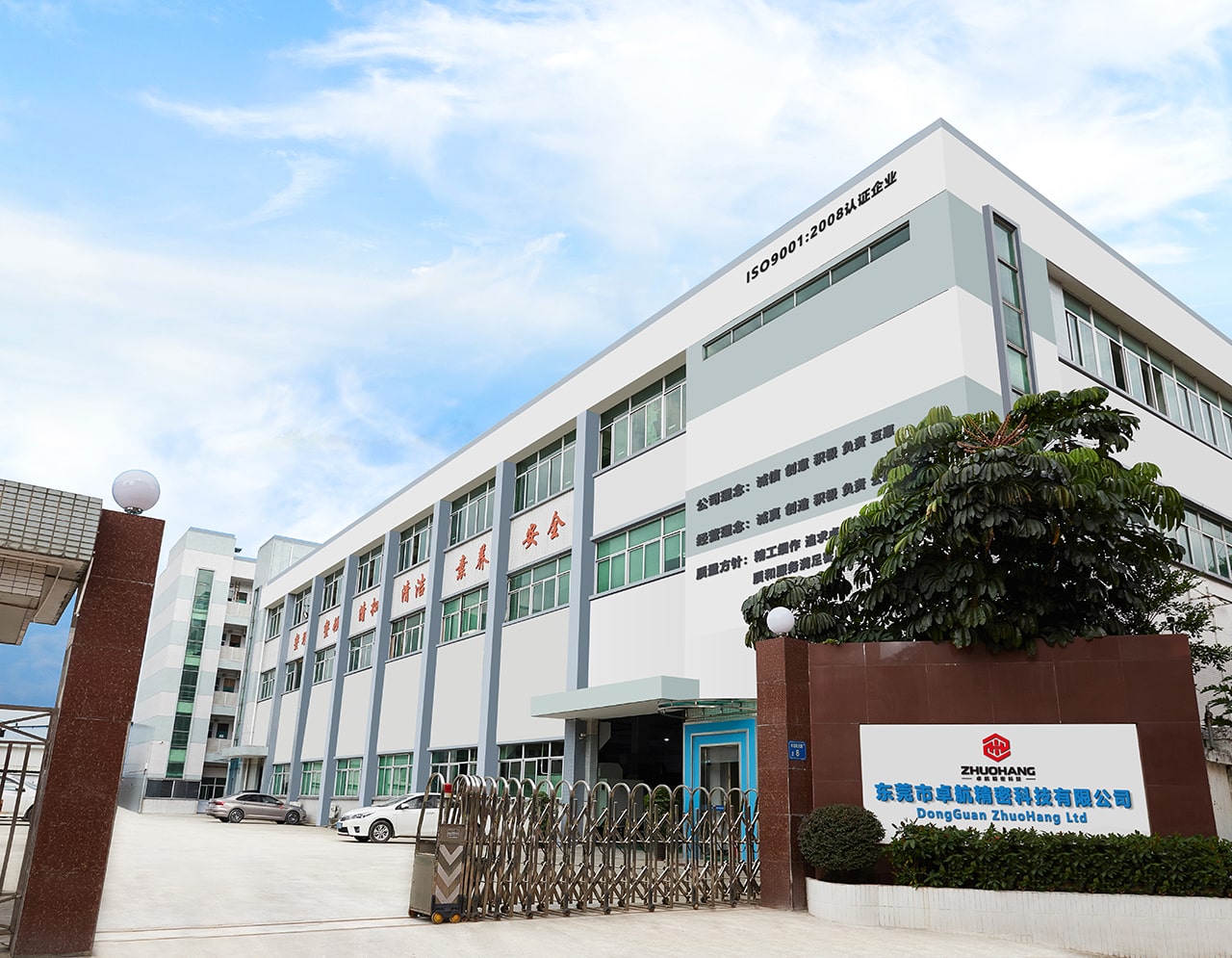
- Legal name — Dongguan Zhuohang Ltd, trading as Zhuohang Precision Machining Factory and Zhuohang Precision Machining Factory; registration 91441900MA4UWT6X39.
- Founded — 2005; 6,800 m² facility; 100+ employees (80%+ skilled technicians).
- Machine fleet — 100+ production machines across Mazak, Brother, Citizen, Star, and Tsugami.
- Address — No. 8, Shuibian Songyuan Road, Hengli Town, Dongguan, Guangdong, China 523470.
Why does the legal entity matter to your cost?
The legal name is the anchor every other check hangs from, and it matters to cost because it determines who is accountable when something goes wrong. The legal entity is Dongguan Zhuohang Ltd, trading as Zhuohang Precision Machining Factory, registration 91441900MA4UWT6X39, established in 2005 — a single entity with a single address and a verifiable history, not a storefront that can disappear into a re-registration.
The cost logic runs in reverse of how most buyers read it. A verifiable entity means a claim you can hold someone to: if the registration traces to one address, the party you pay is the party that owns the machines, the instruments, and the liability. A layer of unverifiable intermediaries means the opposite — you pay one name and chase another when the batch is wrong. Accountability is not paperwork; it is the difference between a defect you can recover and a loss you absorb.
How does facility size and tenure lower your cost?
Size and tenure are cost signals, not bragging points. A 6,800 m² facility with 100+ people — over 80% of them skilled technicians — has survived audits, recessions, and demanding customers since 2005. That stability is what lets a factory hold a quality system and a tolerance repeatably, which is what keeps your total cost predictable instead of a lottery.
Tenure matters to cost in a way most buyers underrate. A factory that has been machining for close to two decades has already paid for its learning — the scrap, the tooling mistakes, the process trials — out of its own pocket, on somebody else's past orders. A new shop prices that learning curve into your first batch, whether it admits it or not. You want a supplier whose learning you do not have to finance.
What does the machine fleet actually contain?
A machine list with brands and counts tells you what a factory can make efficiently, and efficiency is a cost line. The floor runs 100+ production machines across Mazak, Brother, Citizen, Star, and Tsugami, plus 20+ inspection instruments.
| Category | Count | Capability |
|---|---|---|
| 3-axis milling | 50+ | ±0.003 mm |
| 4-axis milling | 20+ | ±0.003 mm |
| 5-axis milling | 20+ | ±0.003 mm (milling) / ±0.002 mm (turning) |
| CNC turning | 25+ | ±0.002 mm, up to Ø720 × 1280 mm |
| Precision grinding | 7+ | ±0.002 mm |
| Inspection equipment | 20+ | CMM, gear, vision, XRF, hardness, coating |
Which certifications remove the cost of failure?

Certifications are the prevention side of the cost equation, verified by a third party. Each carries a number you can trace to the registrar:
| Standard | Certificate number | Scope |
|---|---|---|
| ISO 9001:2015 | 116024/A/0001/UK/En | Machining of metal parts |
| IATF 16949:2016 | 131941/A/0001/SM/En | Manufacture of CNC metal machining parts (excludes product design, Clause 8.3) |
| ISO 14001:2015 | 116024/B/0001/UK/En | Environmental management related to machining of metal parts |
Honest scope note: IATF 16949 excludes product design under Clause 8.3. We are a build-to-print manufacturer — if your program needs design responsibility, say so up front and we will scope it accordingly.
Why does in-house capability lower total cost?
A factory that owns its floor, metrology, and quality system can prevent defects instead of passing them through. In-house capacity removes hand-off margins and coordination cost; SPC at Ppk ≥ 1.67 initial and in-house CMM remove scrap and rework; traceability isolates a defect to one lot instead of a recall. Each is a cost of failure removed before the part is even quoted.
The second-order effect is what most buyers miss. A trading company quotes the same part at the same piece price but must pay a workshop to make it, a subcontractor to inspect it, and a forwarder to stage it — each layer adding a margin and a point where responsibility dissolves. When the part is wrong, you chase several parties instead of one. The factory model removes those layers by owning the floor, the instruments, and the paper trail, which is why the same piece price from a factory and from a middleman are not the same total cost.
Which industries and materials does the factory serve?
The factory machines parts for automotive, robotics, electronics, medical, and automation machinery and equipment, in aluminum, stainless steel, brass, copper, titanium, magnesium, and engineering plastics. Incoming material is XRF-checked against the mill certificate, so the alloy you specify — and pay for — is the alloy you receive.
Industry spread is a cost signal too. A shop that serves both automotive and general machining has survived the discipline of IATF 16949 audits while keeping the flexibility to run a prototype overnight. That mix means your part inherits the process control of automotive work without inheriting an automotive-sized minimum order.
How do machine brands and counts read as a cost signal?
Brand names are only worth reading if you know what to look for: repeatability. A Mazak multi-task center, a Brother drill-tap center, a Tsugami or Citizen sliding-head lathe, and a Sodick class grinder each hold tolerance on a specific geometry. The cost value of those names is not prestige — it is the reduced scrap and rework that comes from a spindle that repeats, a tool changer that does not drift, and a control that holds a feed rate under load.
Count matters for a different reason: scheduling. A shop with 50+ 3-axis centers can slot your prototype without displacing production, which keeps lead time short and capital off the floor. A shop with one machine quotes your part against a queue, and the queue is a cost you carry, not a cost they show.
The same reading applies to the grinders. The 7+ grinding machines hold ±0.002 mm on bearing seats and roundness-critical surfaces, a tolerance a milling spindle alone cannot reach. A factory that owns its grinding is not paying a specialty shop to finish your critical surfaces, and not adding that hand-off's margin and lead time to your landed cost.
How does XRF material verification remove cost before the first cut?
The cheapest place to catch a substituted alloy is at the receiving door, not on your dock. Incoming material is checked by XRF against the mill certificate before it reaches a machine, so a mixed or mislabeled lot is caught before it becomes chips, scrap, or — worst case — a field failure. A substituted alloy saves pennies per part and can cost a program; the XRF check is the insurance that keeps that saving out of your supply chain.
How do you verify a factory claim before you commit?
A factory can be audited from your desk before you ever send a drawing. The claims that matter — legal entity, floor, machines, certificates — are all checkable, and a real factory expects you to check them. A storefront that resists the check is pricing in the risk it is hiding.
- The registration number — 91441900MA4UWT6X39 — and whether it traces to one legal entity with one address.
- A live video call of the floor — the machines, the metrology bench, and the actual 6,800 m², not stock photos.
- Which machines will run your part — brand and count, matched to the tolerance your drawing calls out.
- The certificate numbers and their scope — including any exclusion, such as the Clause 8.3 design exclusion on IATF 16949.
- An XRF or material report on your alloy — evidence the material you pay for is the material you get.
How does the inspection bench lower your cost of failure?
A tolerance is only as real as the instrument that proves it, and the metrology bench here is the same class a buyer would use to audit us. Hexagon GLOBAL S CMMs verify dimensions; a gear measuring center and vision machines check geometry; a KEYENCE VK-X3000 laser microscope and a SURFCOM 1800D profilometer measure surface finish and profile. XRF confirms material composition, and hardness, coating-thickness, salt-spray, and tensile testers cover the rest.
In cost terms, in-house metrology is prevention you can see. When the instrument that verifies a part sits on the same floor as the machine that made it, a drift is caught in minutes, not in a shipping lane. A shop that sends parts out for inspection is adding a hand-off — and the delay and margin that come with it — to every critical dimension. The bench is not a bragging point; it is the part of the factory that keeps scrap off your invoice.
What does a single accountable floor mean when a batch goes wrong?
Every sourcing decision is a bet on what happens after a defect. When the part is wrong, a single-entity factory can contain the failure to one lot, one machine, and one corrective action, because the material record, the process parameters, and the inspection history all live under one roof. A chain of subcontractors answers the same question with finger-pointing, and you pay for the delay while the parties argue about who was responsible.
That is why the legal entity, the address, and the floor all matter to the same number. A verifiable factory turns a failure into a containment event with a known owner; an unverifiable chain turns it into an open-ended loss. The difference shows up in the cost of failure — the one bucket in the total-cost stack that can dwarf every other line on the quote.
What this shop actually runs
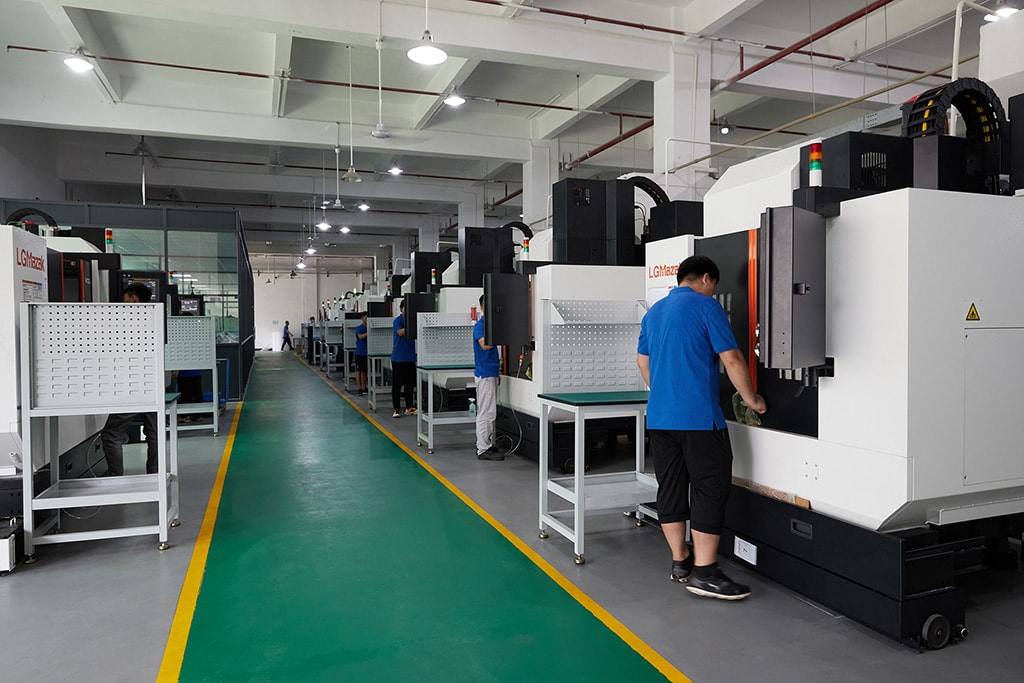
If you ask for capability evidence, you deserve a specific answer. This facility operates 100+ CNC machines across 6,800 m2 in Dongguan, China, staffed by 100+ people. The machines, listed by category:
- 5-axis machining centres (10+) - Mazak VARIAXIS I-600 (510/910/510 mm travel, 12,000 rpm, 22 kW, 71.6 N·m, 30-tool BT40) and Mazak INTEGREX I-250H S (B-axis 0.0001°, 24 kW, 124 N·m, 38-tool HSK-A63). Typical work: compound-angle parts, single-setup multi-face prismatic work, and aerospace fittings where datum transfer loss is unacceptable.
- 3-axis / 4-axis machining centres (50+) - Brother SPEEDIO S500Z2N / S700Z2N (10,000 rpm, 14/21-tool ATC, 0.7 s tool-to-tool, Z-axis 2.2 G) and Mazak VCE-430A L / VCE-570C L (10,000 rpm, 118 N·m, 24-tool ATC). Typical work: prismatic parts, plates, brackets, housings.
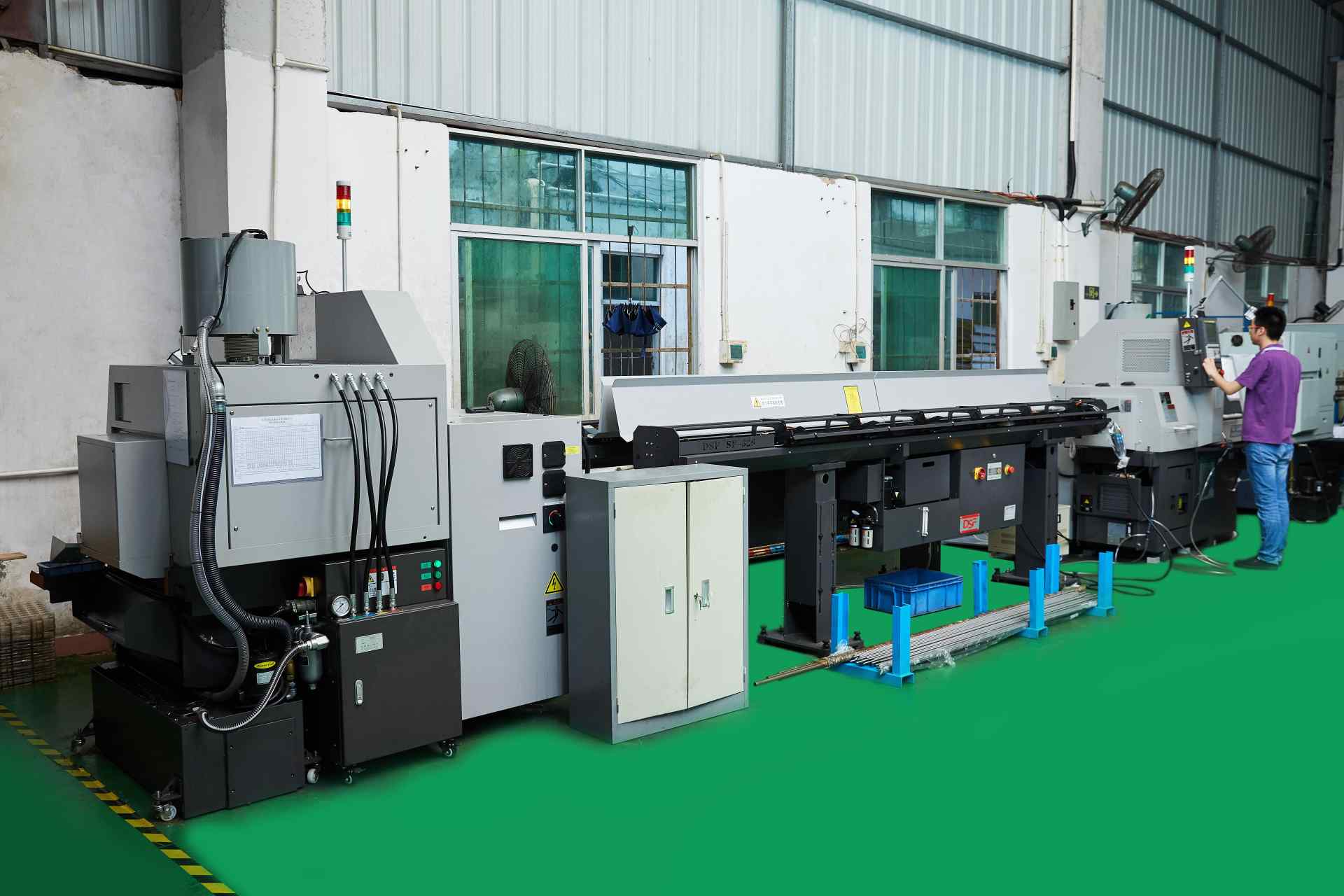
- Swiss-type turning centres (10+) - Citizen Cincom A20-3F7 (Φ20 mm, 10,000 rpm), TSUGAMI B0206-III / B0205-III (Φ20 mm, 0.1 µm), STAR SR-32JII / SR-32J Type N (Φ32 mm, 8,000 rpm). Typical work: long, slender rotational parts at ±0.002 mm.
- CNC turning centres (20+) - HEADMAN T70M/1250 (720 mm swing, 117 mm bore, 3,000 rpm, BMT75 12-station turret). Typical work: shafts, bushings, flanges up to ±0.002 mm.
- Wire EDM (5+) - Sodick AQ535L (550/350/300 mm travel, ±20° taper, 800 kg workpiece). Typical work: hardened tool steel, internal splines, sharp internal corners that milling cannot reach.
- Inspection: Hexagon CMM + 20+ gauges - Hexagon CMM for coordinate measurement, plus vision system, profilometer, hardness tester, coating thickness gauge, XRF for material verification. The 10:1 rule (gauge 10x more accurate than the band) is applied to every feature.
- Machine highlights - VARIAXIS I-600: one-setup multi-face 5-axis + MAZA-CHECK auto-calibration; INTEGREX I-250H S: DONE-IN-ONE mill-turn, B-axis 0.0001° + Ai thermal shield; SPEEDIO S500Z2N / S700Z2N: Z-axis 2.2 G + 0.7 s ATC; Swiss-type: guide-bush switchable + 0.1 µm resolution.
Tolerance bands: ±0.003 mm milled, ±0.002 mm turned, ±0.002 mm ground or wire-cut. Capability indices: Ppk >= 1.67 at the initial study; Cpk >= 1.33 ongoing in production.
Certifications: ISO 9001:2015 (116024/A/0001/UK/En) · IATF 16949:2016 (131941/A/0001/SM/En, design clause 8.3 excluded) · ISO 14001:2015 (116024/B/0001/UK/En), held by Dongguan Zhuohang Ltd (USCC 91441900MA4UWT6X39, since 2005).
Service area: we supply Austria, Belgium, the Czech Republic, Denmark, France, Germany, Greece, Hungary, Ireland, Italy, the Netherlands, Spain, Sweden and the United Kingdom in Europe; Brazil, Canada, Mexico and the United States in the Americas; China, Israel, Japan, Singapore and Sri Lanka in Asia; Australia and New Zealand in Oceania; and South Africa in Africa, with worldwide delivery from China.
Contact: Felipe Iglesias, [email protected], +86 13126536955.
Verify the factory, then price the part.
Email [email protected] or call +86 13126536955 to request the registration, certificates, and a live video call of the floor.
Frequently Asked Questions
What is the legal entity behind the factory?
In short, Dongguan Zhuohang Ltd, trading as Zhuohang Precision Machining Factory and Zhuohang Precision Machining Factory, registration number 91441900MA4UWT6X39 — a manufacturing entity established in 2005. The registration traces to a single legal entity with one address, which you can verify independently.
How large is the facility and how many people work there?
The facility covers 6,800 m² with more than 100 employees, and over 80% of the staff are skilled technicians. A facility this size with this skilled-to-unskilled ratio is what holds a quality system, and what keeps your total cost predictable.
How many machines does the factory run?
100+ production machines — 3-axis (50+), 4-axis (20+), and 5-axis (20+) milling centers, 25+ CNC lathes, and 7+ grinders across Mazak, Brother, Citizen, Star, and Tsugami — plus 20+ inspection instruments including Hexagon CMMs and XRF analyzers.
Which certifications does the factory hold?
ISO 9001:2015 (116024/A/0001/UK/En), IATF 16949:2016 (131941/A/0001/SM/En), and ISO 14001:2015 (116024/B/0001/UK/En), all traceable to the registrar URS. IATF 16949 scope excludes product design under Clause 8.3.
Why do machine brands and counts matter to cost?
Brand and count tell you whether a shop can hold tolerance on the right geometry. Mazak, Brother, Tsugami, and Sodick-class machines repeat reliably, which reduces scrap and rework — a cost of failure removed before the part is quoted.
Why does factory capability lower total cost?
In short, A factory that owns its floor, metrology, and quality system can prevent defects instead of passing them through. In-house capacity removes hand-off margins, SPC and CMM remove scrap and rework, and certifications remove the risk of a failed audit in a regulated supply chain.
Which industries does the factory serve?
Automotive, robotics, electronics, medical, and automation machinery and equipment, machining aluminum, stainless steel, brass, copper, titanium, magnesium, and engineering plastics with incoming material XRF-checked against the mill certificate.
How does XRF material verification remove cost?
Incoming material is XRF-checked against the mill certificate before it reaches a machine. A substituted alloy saves pennies per part and can cost a program — verification at the door catches that substitution before it becomes scrap on your dock.
Standards referenced on this page
- IATF 16949:2016 — Automotive quality management system standard
- ASTM B348/B348M-21 — Standard Specification for Titanium and Titanium Alloy Bars and Billets
- ASTM B211/B211M-19 — Standard Specification for Aluminum-Alloy Rolled or Cold Finished Bar, Rod, and Wire