
- Material — the alloy grade, verified by XRF against the mill certificate.
- Tolerance — ±0.003 mm milling / ±0.002 mm turning, ±0.002 mm grinding, proven on a CMM.
- Process steps — each setup and operation adds cost and lead time.
- Finishing — anodizing, plating, coating, with outsourced steps disclosed.
Which cost driver matters most for your part?
Material, tolerance, process steps, and finishing drive a part's cost far more than its size, and if you know which one dominates, you can compare suppliers on the right number. A simple bracket in 6061 aluminum is a material-and-setup cost; a tight-tolerance titanium shaft is a tolerance-and-inspection cost. The same part quoted two ways is not the same part.
| Cost driver | How it raises cost | How to control it |
|---|---|---|
| Material grade | Alloy cost, machinability, tool wear | Specify the grade the part actually needs |
| Tolerance | Slower feeds, more inspection, temperature control | Hold tight tolerance only where it matters |
| Process steps | Setups, fixtures, machine time | Reduce operations through design-for-manufacturing |
| Finishing | Extra steps, lead time, outsourcing | Bundle where a single supplier is accountable |
Which materials can the factory machine?
The material you specify determines the part's cost floor and its performance ceiling. We machine the alloys buyers actually call out on drawings, and verify every incoming lot by XRF against its mill certificate before it reaches a machine.
| Material family | Grades | Notes for buyers |
|---|---|---|
| Aluminum | 6061, 6063, 6082, 7075, 2014 | Most common choice; anodizes well |
| Stainless steel | 303, 304, 316, 316L, 17-4PH | 303 free-machining, 316L corrosion, 17-4PH strength |
| Carbon / alloy steel | 1018, 1045, 4140, 4340, 12L14 | Carburizing or nitriding for wear parts |
| Brass / copper | C360, H62, C110 | For electrical and thermal conductivity |
| Titanium | Grade 2, Grade 5 | Stress relief above 500 °C outsourced to a partner |
| Plastics | ABS, POM, nylon, PTFE, PEEK | For non-metal prototypes and insulators |
How does material grade and machinability set the cost floor?
Machinability is a published property of a material, and it prices a part more reliably than the raw stock does. The easier a grade cuts, the faster the spindle turns, the longer the tool lasts, and the fewer setups a batch needs. A free-machining grade lowers the per-unit cost through machine time and tool wear — not through the price of the billet — and that saving compounds across a production run.
| Material | Typical density | Machining behavior | Cost note |
|---|---|---|---|
| 6061-T6 aluminum | 2.70 g/cm³ | Fast, predictable, sheds heat well | The default; lowest cost per part |
| 7075-T6 aluminum | 2.81 g/cm³ | Cuts a little slower, high strength | Aerospace-grade strength at a premium |
| 5052 aluminum | 2.68 g/cm³ | Soft, formable, marine corrosion | For corrosion, not strength |
| 303 / 304 stainless | ~8.0 g/cm³ | Work-hardens; 303 cuts cleaner | Higher cost per part than aluminum |
| 316 / 316L stainless | ~8.0 g/cm³ | Slower than 303, molybdenum resists chloride | Premium for corrosion resistance |
| 4140 alloy steel | 7.85 g/cm³ | Hard, wears tools, heat-treatable | Strength and wear at a mid cost |
The lesson is the same as everywhere else in the total-cost stack: pick the grade that earns its keep. A drawing that demands stainless where aluminum would function is paying for corrosion resistance the part never uses, and paying for it in machine time, not just in stock.
How do tolerances turn into money — in both directions?
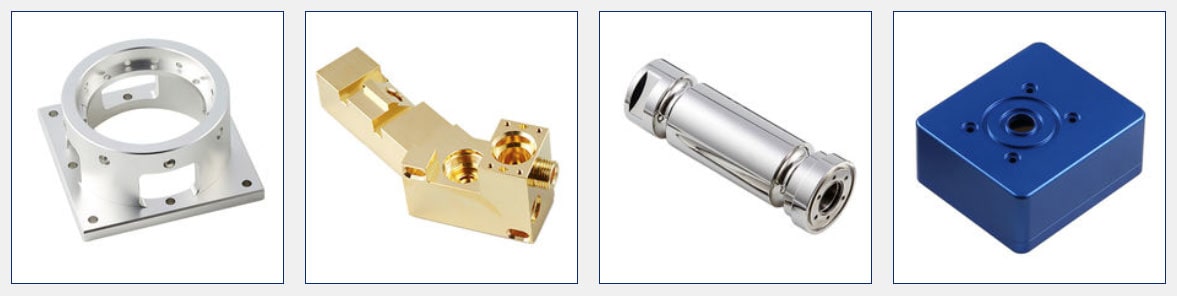
A tolerance costs more to hold and saves more when it is actually held. Holding ±0.003 mm (milling) / ±0.002 mm (turning) means slower feeds, sharper tooling, and CMM inspection on the critical dimensions; the payback is a part that fits on arrival instead of a batch that fails incoming inspection. The tolerance you specify is the difference between a cheap quote and a cheap part — in total cost, they are opposites.
How do ISO 2768 tolerance classes map to money?
ISO 2768 is the standard for general tolerances on dimensions without an individual tolerance callout. It grades them as fine (f), medium (m), coarse (c), and very coarse (v), and the grade you pick is a cost decision, because the shop must control its whole process to the finer band even on features that do not need it.
| Class | Meaning | Cost effect |
|---|---|---|
| Fine (f) | Tightest general tolerance | Process control on every dimension; highest cost |
| Medium (m) | Standard workshop precision | The balanced default for most machined parts |
| Coarse (c) | Looser, non-critical | Lower cost; for clearance and cosmetic features |
| Very coarse (v) | Rough, non-functional | Cheapest; rarely used on machined parts |
The money mistake is over-specifying. A drawing marked ISO 2768-f everywhere forces fine process control on a bracket that only needs medium, and you pay that premium on every unit, forever. Specify the class the function needs, and hold the shop to it with measurement, not the reverse.
How does surface finish (Ra) trade against machining cost?
Surface roughness is measured in Ra (micrometres), and each step down the scale costs machine time. The rough 3.2 µm surface comes off a standard cut; 1.6 µm needs a controlled finish pass; 0.8 µm usually requires grinding or fine finishing; 0.4 µm and below is a polished or ground surface reserved for sealing and bearing faces. A part that calls out 0.8 µm across its whole surface is paying a grinding price for surfaces that will never touch anything.
| Ra target | How it is produced | Typical use |
|---|---|---|
| 3.2 µm | Standard machining cut | Non-critical surfaces, clearances |
| 1.6 µm | Controlled finish pass | General machined parts |
| 0.8 µm | Fine finish or grinding | Sealing and locating faces |
| 0.4 µm and below | Grinding, honing, polishing | Bearing seats, dynamic seals |
The discipline mirrors tolerance: specify Ra only where the function demands it, and put the finishing budget on the surfaces that actually meet another part.
How does finishing add cost, and hide cost?
Finishing adds process steps, lead time, and the risk of a hand-off to a supplier you never audited. Anodizing, plating, powder coating, painting, brushing, and polishing can be bundled here so one accountable supplier owns the finished part, and any outsourced step, such as titanium stress relief above 500 °C, is disclosed up front rather than buried in the price.
How does the minimum order quantity protect your budget?
The MOQ is one piece, and that is a cost decision, not a marketing line. It lets you order a single part, measure it against your print, and judge the process before committing to volume. The alternative — a high minimum that forces a large first buy before the process is proven — is the buyer financing the supplier's learning curve.
Which DFM rules cut cost without cutting function?
Design-for-manufacturing is where a part's cost is decided before it reaches a machine. The rules below are standard practice, and a shop that flags them early saves you more than one that agrees to everything and charges for the trouble later.
- Radius internal corners — a rotating tool cannot cut a square internal corner; leave a radius at least the tool radius, or the part needs extra setups or EDM.
- Keep hole depth to about 4× the diameter — deeper holes need peck drilling, special tooling, and slower cycles.
- Keep wall thickness above about 0.8 mm in metal — thinner walls chatter, distort, and cost rework.
- Avoid deep narrow pockets — a pocket deeper than roughly 4× its width needs long-reach tools that flex and break.
- Hold tight tolerance only on functional features — a blanket ±0.003 mm (milling) / ±0.002 mm (turning) across a whole print is a premium you pay on every unit.
How do you prove a part is right before paying for volume?
The first article is the cheapest insurance in the whole cost model. Send a real drawing, have a single part or small batch machined, and measure it on your own CMM against the factory's dimensional report. The gap between your measurement and theirs is your true measure of the supplier, and it is the step that turns a piece price into a total cost you can actually trust.
How does a repeat order hold the same per-unit cost?
The first order pays for the learning: the setup, the tooling, the program. A repeat order should cost less, or stay flat, because that learning is banked — provided the shop keeps your fixture, program, and inspection plan on file and reproduces the part without re-learning it. A shop that loses that continuity charges you for the learning again, either in the price or in a slower ramp-up and the scrap that comes with it. Ask what happens on the second order: the answer is a forward price on your future batches.
How do you interrogate a part quote before you compare it?
A quote is only as honest as the questions it can survive. Before you line two quotes up side by side, force each to name its assumptions — the cheaper number usually stays cheap by keeping them unstated. A part that cannot answer these is not quoted, it is estimated.
- Which material grade is assumed, and does the mill certificate ship with the parts, or is the alloy taken on faith?
- Which dimensions are held tight — a real quote names the critical dimensions and their tolerance, not just "±0.003 mm (milling) / ±0.002 mm (turning)" across the whole print.
- Which finishing steps leave the building, and to whom, at what tolerance and what lead time.
- Will a first article ship before the production run — one you can measure on your own CMM, not just a photo of a good part.
- What Ra and ISO 2768 class are priced, so the quote reflects the surface and tolerance your drawing actually calls out.
What this shop actually runs
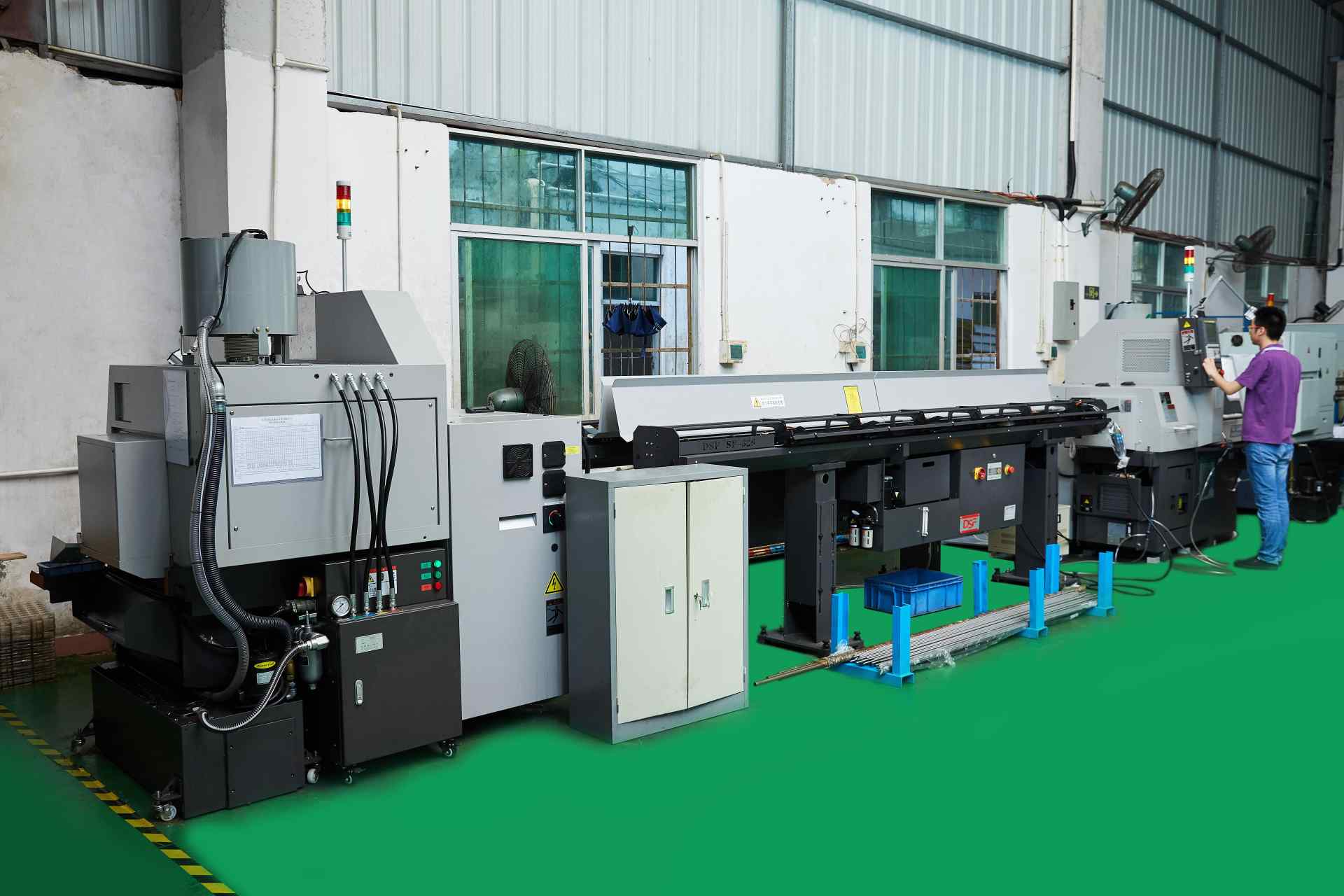
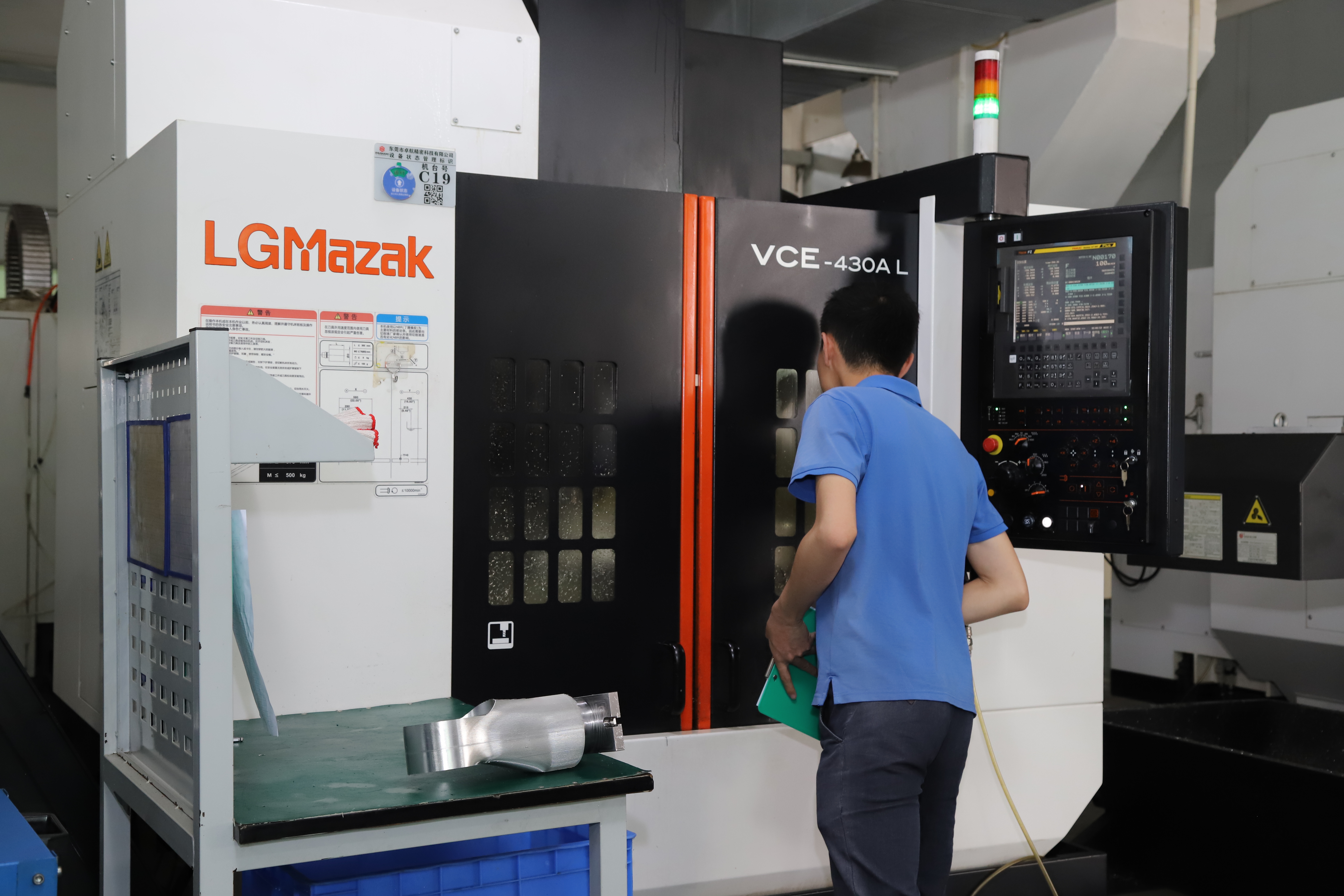
If you ask for capability evidence, you deserve a specific answer. This facility operates 100+ CNC machines across 6,800 m2 in Dongguan, China, staffed by 100+ people. The machines, listed by category:
- 5-axis machining centres (10+) - Mazak VARIAXIS I-600 (510/910/510 mm travel, 12,000 rpm, 22 kW, 71.6 N·m, 30-tool BT40) and Mazak INTEGREX I-250H S (B-axis 0.0001°, 24 kW, 124 N·m, 38-tool HSK-A63). Typical work: compound-angle parts, single-setup multi-face prismatic work, and aerospace fittings where datum transfer loss is unacceptable.
- 3-axis / 4-axis machining centres (50+) - Brother SPEEDIO S500Z2N / S700Z2N (10,000 rpm, 14/21-tool ATC, 0.7 s tool-to-tool, Z-axis 2.2 G) and Mazak VCE-430A L / VCE-570C L (10,000 rpm, 118 N·m, 24-tool ATC). Typical work: prismatic parts, plates, brackets, housings.
- Swiss-type turning centres (10+) - Citizen Cincom A20-3F7 (Φ20 mm, 10,000 rpm), TSUGAMI B0206-III / B0205-III (Φ20 mm, 0.1 µm), STAR SR-32JII / SR-32J Type N (Φ32 mm, 8,000 rpm). Typical work: long, slender rotational parts at ±0.002 mm.
- CNC turning centres (20+) - HEADMAN T70M/1250 (720 mm swing, 117 mm bore, 3,000 rpm, BMT75 12-station turret). Typical work: shafts, bushings, flanges up to ±0.002 mm.
- Wire EDM (5+) - Sodick AQ535L (550/350/300 mm travel, ±20° taper, 800 kg workpiece). Typical work: hardened tool steel, internal splines, sharp internal corners that milling cannot reach.
- Inspection: Hexagon CMM + 20+ gauges - Hexagon CMM for coordinate measurement, plus vision system, profilometer, hardness tester, coating thickness gauge, XRF for material verification. The 10:1 rule (gauge 10x more accurate than the band) is applied to every feature.
- Machine highlights - VARIAXIS I-600: one-setup multi-face 5-axis + MAZA-CHECK auto-calibration; INTEGREX I-250H S: DONE-IN-ONE mill-turn, B-axis 0.0001° + Ai thermal shield; SPEEDIO S500Z2N / S700Z2N: Z-axis 2.2 G + 0.7 s ATC; Swiss-type: guide-bush switchable + 0.1 µm resolution.
Tolerance bands: ±0.003 mm milled, ±0.002 mm turned, ±0.002 mm ground or wire-cut. Capability indices: Ppk >= 1.67 at the initial study; Cpk >= 1.33 ongoing in production.
Certifications: ISO 9001:2015 (116024/A/0001/UK/En) · IATF 16949:2016 (131941/A/0001/SM/En, design clause 8.3 excluded) · ISO 14001:2015 (116024/B/0001/UK/En), held by Dongguan Zhuohang Ltd (USCC 91441900MA4UWT6X39, since 2005).
Service area: we supply Austria, Belgium, the Czech Republic, Denmark, France, Germany, Greece, Hungary, Ireland, Italy, the Netherlands, Spain, Sweden and the United Kingdom in Europe; Brazil, Canada, Mexico and the United States in the Americas; China, Israel, Japan, Singapore and Sri Lanka in Asia; Australia and New Zealand in Oceania; and South Africa in Africa, with worldwide delivery from China.
Contact: Felipe Iglesias, [email protected], +86 13126536955.
Price your part by its real cost drivers.
Send your drawing to [email protected] or call +86 13126536955 for a quote that separates material, tolerance, process steps, and finishing, and a first article you can measure.
Frequently Asked Questions

What drives the cost of a CNC machined part?
In short, Material grade, tolerance, the number of process steps, and finishing drive the cost far more than the part's size. A tight tolerance needs slower feeds and more inspection; a complex part with many operations needs more setups; finishing adds steps.
Which materials does the factory machine?
Aluminum (6061, 6063, 6082, 7075, 2014), stainless steel (303, 304, 316, 316L, 17-4PH), carbon and alloy steel (1018, 1045, 4140, 4340, 12L14), brass and copper (C360, H62, C110), titanium (Grade 2 and Grade 5), and engineering plastics.
How do I make sure I am paying for the material I specified?
In short, Incoming material is XRF-checked against the mill certificate before it reaches a machine, and the certificate ships with your parts. A substituted alloy saves pennies per part and can cost a program — verification at the door is the cheap insurance against it.
What is the minimum order quantity for machined parts?
One piece. Prototype, single-part, and production orders are all accepted, so you validate a design on a single part before committing to volume — capping the downside of a bad decision instead of buying a large first batch unproven.
How does finishing affect the total cost of a part?
In short, Finishing adds process steps and lead time, and it is where hidden cost often lives. Anodizing, plating, and coating are bundled here with any outsourced step — such as titanium stress relief above 500 °C — disclosed up front, so the quote prices the finished part, not a blank.
What evidence proves a machined part is right before I pay for volume?
In short, A first article you measure on your own CMM, plus the factory's dimensional report and SPC chart from a real job. That measured evidence is what converts a piece price into a total cost you can trust, by proving the process before the production order.
How do ISO 2768 tolerance classes affect cost?
ISO 2768 grades general tolerances as fine (f), medium (m), coarse (c), and very coarse (v). The finer the class, the more a shop must control its process, so a drawing that over-specifies fine tolerances pays for precision the part never uses.
How does surface finish (Ra) change the cost?
A rough 3.2 µm surface comes off a standard cut; 1.6 µm needs a controlled finish pass; 0.8 µm usually needs grinding or fine finishing. Each step down in Ra adds machine time and cost, so Ra should be specified only where the function requires it.
Continue reading: China Machining Factory · China Machining Factory Services · China Machining Factory
Standards referenced on this page
- ASTM B211/B211M-19 — Standard Specification for Aluminum-Alloy Rolled or Cold Finished Bar, Rod, and Wire
- ASTM A276/A276M-17 — Standard Specification for Stainless Steel Bars and Shapes
- ISO 9001 — Quality management systems — Requirements