
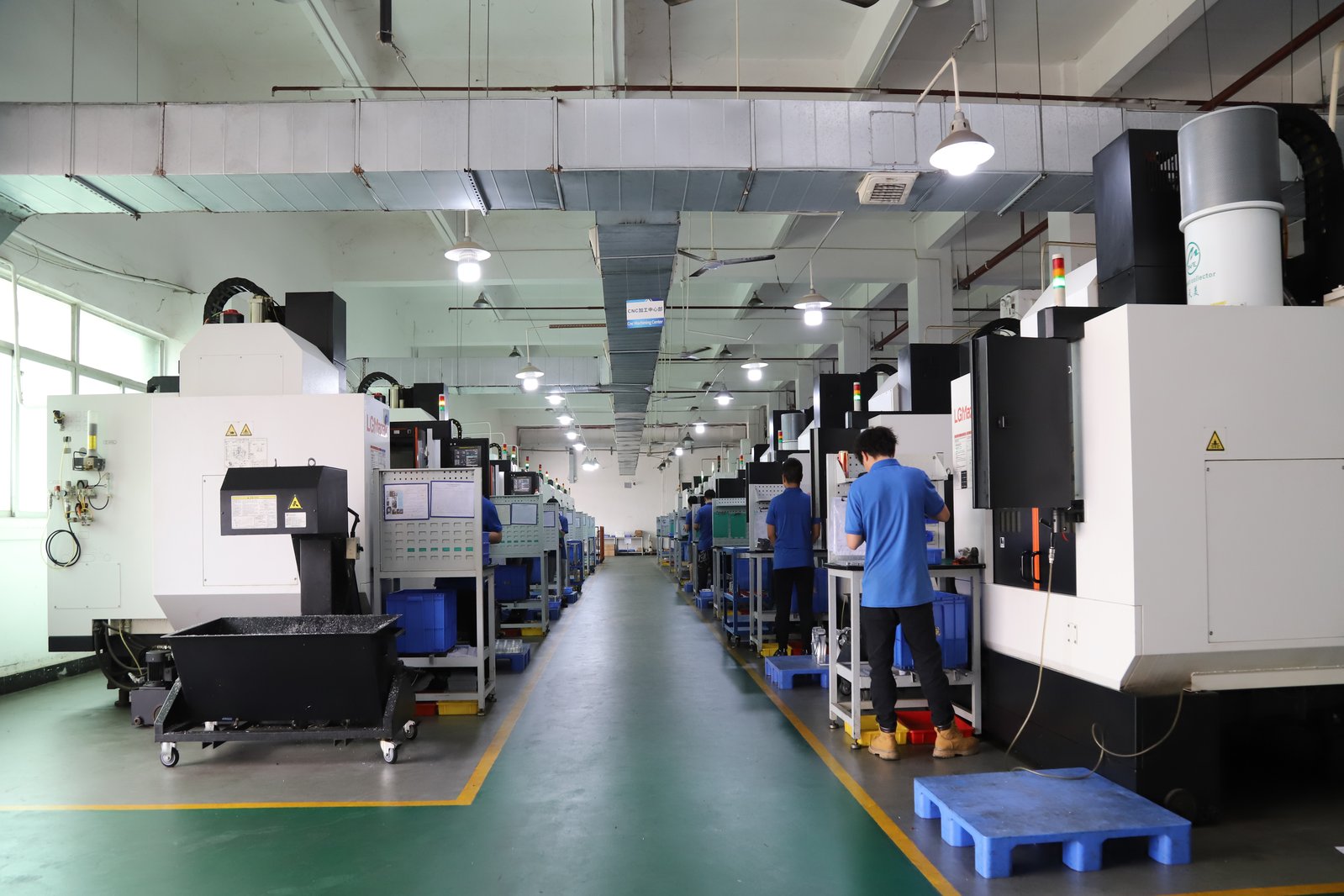
Every sourcing order from a China machining factory buys two things at once: a batch of parts and a working relationship. The parts are verified by inspection; the relationship is verified by behaviour — how the factory quotes, how it answers questions, how it keeps commitments, how it handles problems, and how it treats your drawings and your money. The parts can be measured at the end of the order, but the relationship has to be judged as it develops, because most of what goes wrong in machining sourcing goes wrong in the relationship before it ever shows up in the parts. This guide shows what to verify about the relationship itself, at each stage from the first enquiry to the post-order review.
What separates a sourcing conversation from a sales pitch?
The fastest way to tell them apart is to count the questions the supplier asks about your part. A factory that interrogates the drawing — asking what the part does, why the tolerance is where it is, which material the function really needs, how the part will be inspected and used — is doing the work of quoting the real part. A supplier that answers with capability lists and urgency, without asking anything that would change the price, is pitching a service rather than engineering an order. The questions reveal which one you are dealing with before any money moves.
The quality of the questions predicts the quality of the relationship because it predicts the quality of the work. A supplier that asks about function will make better decisions when the drawing is ambiguous; a supplier that asks nothing will guess, and the guess lands on your side of the file. When you review quotations, weight the question list as heavily as the price — a shop that interrogated the drawing is quoting the part you drew, while a shop that did not is quoting the part it assumed. On this site the services page shows the scope a serious quoting conversation has to cover, and the questions should arrive with the quotation, not instead of it.
Which behavioural signals during quoting predict the relationship?
Three signals during quoting carry most of the predictive weight. Specificity: does the supplier answer technical questions with numbers, processes, and named instruments, or with adjectives? Speed: does it respond within a window that suggests an organised desk, or after delays that suggest the enquiry is not being tracked? Honesty: does it volunteer what its price excludes — the certificate, the report, the freight — or does it wait to be asked? Each signal is a small sample of how the supplier will behave for the rest of the relationship, and samples taken during quoting are the cheapest ones available.
Read the signals as a pattern rather than as isolated events. One slow answer is a busy week; slow answers on every question is a supplier that does not prioritise enquiries, and an enquiry that is not prioritised becomes an order that is not prioritised. One vague answer is a language gap; vague answers on every technical question is a shop that does not know its own process. The pattern at quoting is the pattern you will live with, because the habits that produce it are the factory's habits, and habits do not change when the order arrives. Choose the factory whose quoting behaviour you want to inherit.
How do you turn a quotation into a contract without legalese?
A machining order does not need a lawyer's document; it needs a written statement that both sides can check. The purchase order should carry the drawing revision, the material with its condition, the tolerance approach, the finish, the inspection deliverables with their language, the incoterm and freight ownership, the lead time with its milestones, the payment structure with its evidence gates, and the remedy for nonconformance. Written plainly, in one page, it becomes the contract that both sides can verify against, which is what a contract is for in a relationship measured across a distance.
The discipline is to write the terms before the work, not after a problem. A supplier that accepts a clear purchase order without friction is a supplier comfortable with clarity; a supplier that pushes back on written terms is a supplier that prefers flexibility, and flexibility in an order usually means flexibility in your direction. When the purchase order is plain and complete, every later conversation has a reference point — the milestone that slipped, the document that was missing, the nonconformance that needs a remedy are all checked against the page, not against a memory of what was agreed.
Which commercial terms deserve attention beyond the price?
Beyond the price, five terms carry the commercial risk of the order. Currency and payment structure decide who carries the exchange and cash-flow risk, so confirm both in writing and keep the proportions evidence-based. Incoterm decides where the ownership and the freight risk transfer, so choose it consciously rather than by default. The bank account details must reconcile to the legal entity, because a payment to a mismatched account is a payment to an unknown. The lead time with its milestones is a commercial term as much as a schedule, because it defines what late means. And the document set with its language is a term because it defines what delivered means. Each of the five is verified at the order stage, and each one verified is a dispute that will not happen later.
Most of these terms cost nothing to verify and everything to skip. A currency check takes a minute, an incoterm decision takes a conversation, and a bank account reconciliation takes an email to the entity's registration. None of them requires legal help, and all of them close the gaps where commercial disputes are born. The factory behind this site presents its entity and its documentation on the factory page so a buyer can reconcile the commercial terms against published facts rather than against a sales conversation, which is exactly how a commercial relationship should start.
How do communication protocols keep a remote order on track?
A remote order runs on its communication, and the protocol should be fixed before the order rather than improvised during it. Name the technical contact on each side, agree the language of the records, and decide that every decision affecting the specification, the schedule, or the money is confirmed in writing. Written decisions are the order's memory; phone decisions are its amnesia, because a change agreed by voice and forgotten by both sides is a change that never happened, and the parts will be made to the drawing that no one updated.
The reporting cadence belongs in the same protocol. Milestone reports at the order's checkpoints — material arrived, first article ready, production complete, pre-shipment evidence sent — keep the calendar visible without burdening either side, and the emails become the audit trail that protects both parties when a date is later disputed. A supplier that reports at the agreed cadence without being chased is managing the relationship; one that has to be chased is managing something else. The protocol is not bureaucracy; it is the operating system of a relationship that cannot rely on walking over to the other desk.
What does a good escalation look like when something goes wrong?
Every real relationship experiences a bad lot, and the escalation is where the relationship proves its quality. A good escalation starts with the document: the nonconformance is described against the drawing, the evidence is attached, and the remedy clause is referenced. It moves through the agreed decision — rework and re-inspection, a replacement run, or a written concession accepted by the buyer — with dates attached to whichever path is chosen. The money that was gated behind the evidence stops or flows according to the clause, and the relationship continues because the rule was written before the failure.
The factory's behaviour during the escalation is the test. A factory that documents the nonconformance honestly, proposes the remedy quickly, and re-inspects properly has passed the test that matters, because it has shown it can be relied on when the order goes wrong, which is exactly when reliability matters. A factory that argues about the evidence, delays the remedy, or blames the drawing has shown the behaviour that should end the relationship or shrink the next order. The escalation is not a sign of a bad supplier; it is a routine event that reveals which suppliers are good, and the revealed information should be filed in the supplier record.
How do you protect your drawings when sourcing from China?
Intellectual property protection in machining sourcing is about controlling the file, not hoping for the best. The tools are practical: a non-disclosure agreement signed before the drawings move, covering the documents and the permitted purpose; documents marked confidential and limited to the revision needed for the order; a stated rule that the files are provided for quoting and manufacturing this order only; and a written confirmation of how the files are handled and retained after the order. Each tool is a small contract, and together they make the use of your drawings a defined act rather than an open one.
Treat hesitation as the signal, not the ceremony. A serious factory signs NDAs routinely — its legal comfort is part of doing international business — and will return the signed document without drama. A factory that hesitates, negotiates, or offers verbal assurances instead of a signature is telling you that it values the flexibility more than the trust, and that is information worth having before the drawings move. The protection is not about distrusting every factory; it is about making the ones you trust accountable in the same way, so that the trust is built on agreements rather than on assumptions.
What should the review after each order feed into?
The relationship should be reviewed with the same honesty as the parts. After each order, score the relationship against the record: how did the quoting behave, were the documents clean and on time, did the milestones hold, how were problems escalated and resolved, and was the commercial handling as agreed? File the score with the supplier record, because over several orders the pattern of scores is the real rating of the relationship, and the rating should decide the size of the next order, the pace of the payment relaxation, and the depth of the trust.
The review is also the input to the next order's terms. A factory whose documents were clean earns faster payment terms; one whose pre-shipment evidence was late earns a stricter gate. A factory whose behaviour at escalation was excellent earns the next order at a larger volume; one whose behaviour was poor earns the smaller order or the exit. The relationship compounds in both directions, and the buyer who reviews after every order is steering the compound. The review is the last step of one order and the first step of the next, and on it rests the difference between a chain of improving relationships and a series of repeated surprises. The quality documentation behind this site, shown on the quality page, is part of the record that makes such reviews possible rather than speculative.
The buyer's rule of thumb: verify the relationship with the same rigour as the parts — interrogate the quote, write the terms, protect the drawings, follow the protocol, and review after every order. The parts can be inspected; the relationship has to be steered.
Frequently Asked Questions
How do I tell a sourcing conversation from a sales pitch?
By the questions each side asks. A supplier that interrogates your drawing — asking about function, tolerance, material, and inspection — is quoting the real part. A supplier that answers with capability statements and urgency is pitching. The quality of the supplier's questions at quoting is the single best predictor of the relationship that follows.
Which terms matter beyond the price in a machining order?
Currency and payment structure, incoterm and freight ownership, the bank account details verified against the entity, the lead time with its milestones, the document set, and the remedy for nonconformance. Price is what is compared; terms are what is lived with, and the terms deserve as much verification as the number.
How do I protect my drawings when sourcing from China?
Protect the file, not the hope. Sign a non-disclosure agreement that covers the drawings and the purpose of their use, mark the documents as confidential, share only the revision needed, and state that the files are for quoting and manufacturing this order only. A serious factory treats NDAs as routine; hesitation is the signal to pause.
What communication protocol keeps a remote order on track?
A named technical contact on each side, a written record for every decision, and a fixed reporting cadence at the order's milestones. Decisions made by phone are decisions that evaporate; decisions confirmed in writing are decisions the order can actually run on. The protocol costs minutes and prevents the misalignment that costs weeks.
What does a good escalation look like when an order goes wrong?
It starts with the document: the nonconformance, the evidence, and the reference to the remedy clause. It moves through the agreed decision — rework, replacement, or concession — with dates attached. A factory that escalates through evidence rather than through arguments is a factory whose relationship can survive the bad lot.
Which behavioural signals during quoting predict a good supplier?
Specificity, speed, and honesty. A supplier that answers technical questions with specifics, responds within a reasonable window, and tells you what its price excludes is behaving like a partner. A supplier that is vague, slow, or silent about exclusions is behaving like a vendor of last resort, and the behaviour will not improve after the order.
What should the review after each order feed into?
The supplier file and the next order. Record how the quoting went, whether the documents were clean, whether the milestones held, and how problems were handled. Over several orders the file becomes the real rating of the relationship, and it should decide the size of the next order and the pace of the trust.
Ready to verify the relationship before the drawings move?
Send the drawing and the enquiry stage through the contact page — the review returns the questions, terms, and protocol a serious quoting conversation should include.