
- In-house vs outsourced — every hand-off adds a margin and a supplier you never audited.
- Setup & tooling — fixed cost spread over the run; reuse lowers it.
- Lead time — 3 / 7 / 30-day tiers; lead time is inventory cost.
- MOQ 1 — validate on one piece before committing to volume.
Why does "in-house" show up in your cost?
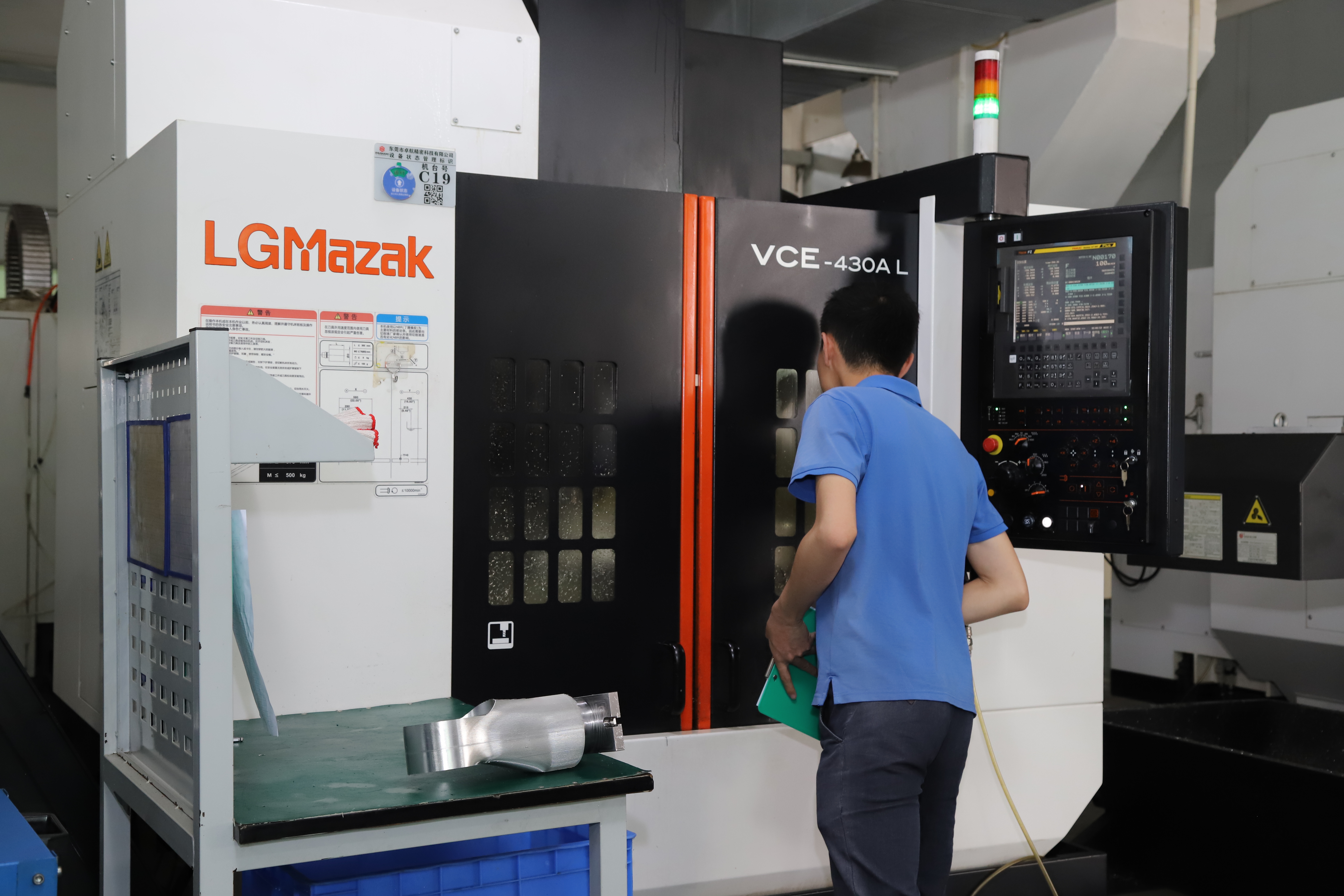
Every step that leaves the building adds a hand-off, a margin, and a supplier you have not audited. In-house capacity means one accountable supplier and a shorter chain between your drawing and a finished part. The audit question is simple: which steps happen here, and which steps go to a partner, and to whom? A supplier that hides its outsourcing is hiding the part of your order it does not control.
| Service | Capacity | Held tolerance | Max workpiece |
|---|---|---|---|
| 3-axis milling | 50+ centers | ±0.003 mm | 1300 × 700 × 600 mm |
| 4-axis milling | 20+ centers | ±0.003 mm | |
| 5-axis milling | 20+ centers | ±0.003 mm (milling) / ±0.002 mm (turning) | |
| CNC turning | 25+ lathes | ±0.002 mm | Ø720 × 1280 mm |
| Mill-turn | Mazak / Brother class | ±0.003 mm (milling) / ±0.002 mm (turning) | Single-setup complex geometry |
| Precision grinding | 7+ grinders | ±0.002 mm | Surface / centerless / cylindrical |
How does tooling get amortized across a run?
Fixtures and setups are a fixed cost spread over the number of parts. A short run means the tooling dominates the per-part price; a long run makes it negligible. The levers are design-for-manufacturing that reduces the number of setups, and a shop that reuses fixturing instead of building new per order. Ask how tooling is amortized before you compare two quotes — a lower piece price with a hidden tooling charge is not a lower price.
The honest way to read a tooling line is to ask where it goes on the next order. A fixture that is yours, kept on file, and reused on the repeat run amortizes toward zero over the life of the part. A fixture quoted as a fresh charge every order is a recurring tax hidden inside the "tooling" bucket. The same applies to programs and inspection plans: a shop that banks its setup work passes that saving back to you on the second and third orders.
How do lead time and MOQ become cost numbers?
Lead time is an inventory cost: a 30-day lead means 30 days of working capital tied up in parts you have not received. MOQ is a risk cost: a one-piece minimum lets you validate a design before committing to volume, capping your downside. Our lead times are tiered by complexity — roughly 3, 7, or 30 days depending on process steps — and the MOQ is one piece, both of which reduce the capital you have at risk.
Read lead time as a financing term. A supplier that ships in three days is lending you back nearly a month of working capital compared with a 30-day lead, and that is money you can hold for the next order instead of parking in a container in transit. A lead time you can trust is a scheduling asset; a lead time that slips is a line-down waiting to happen.
Why does capacity matter to cost, not just feasibility?
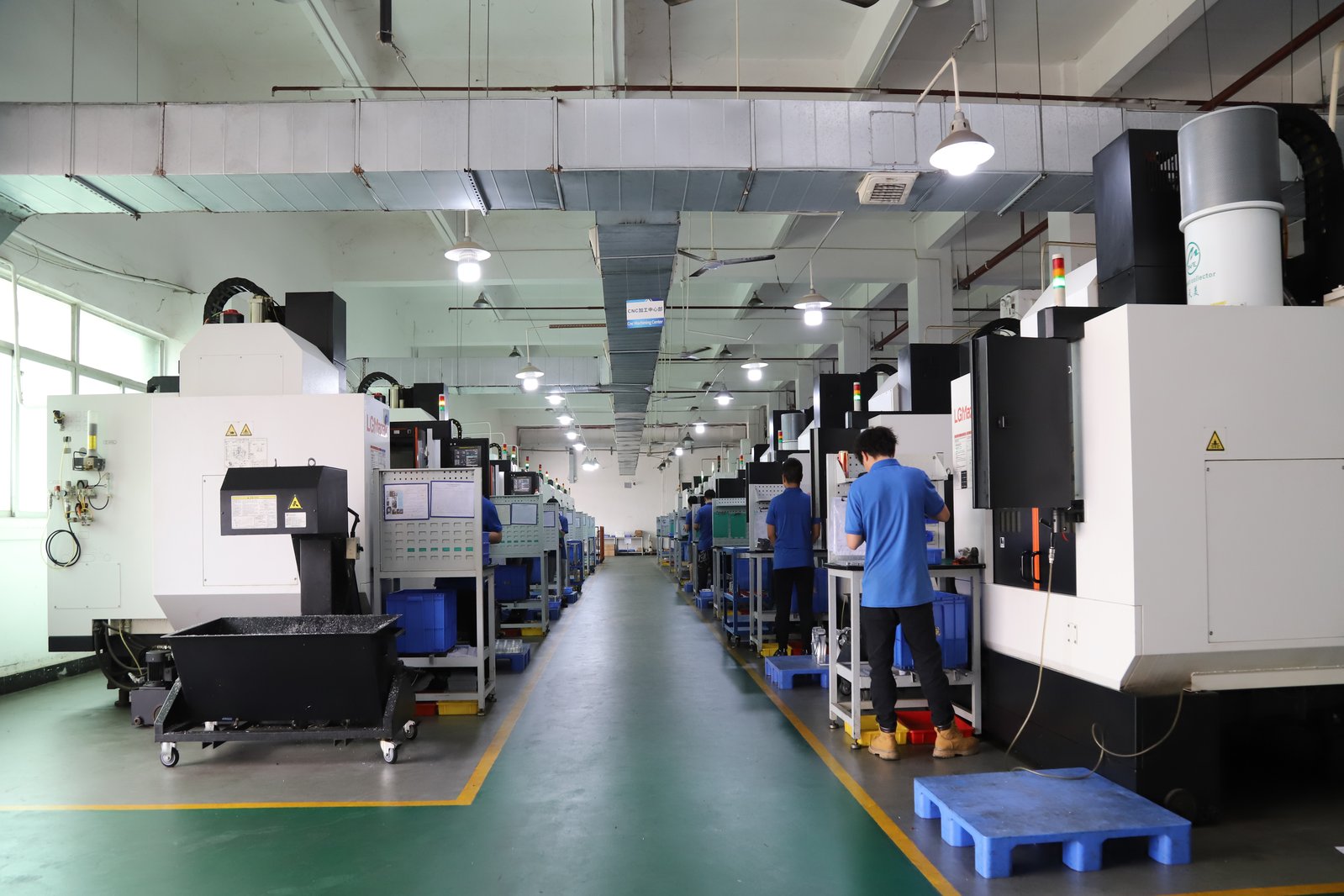
Capacity is a cost signal because it tells you whether the part can be made efficiently on the right machine. Milling handles workpieces up to 1300 × 700 × 600 mm and turning up to Ø720 × 1280 mm, and a part that exceeds these is flagged during the design review, before a setup is wasted. An early flag is cheaper than a ruined run, which is why honest capacity is a TCO feature.
How do tolerances and process control protect the budget?
A tolerance costs more to hold and saves more when it is held. Running SPC at Ppk ≥ 1.67 at the initial study on key characteristics and Cpk ≥ 1.33 on general characteristics. Capability is reported per characteristic: every report names the feature, its tolerance band, the sample size, the sigma method, and the study window., with CMM verification on critical dimensions, produces fewer rejects and less rework — removing the unpredictable cost of a rejected batch. The predictable process is the part of the service that makes total cost go down.
The budget math runs on the cost of failure, not the cost of prevention. Prevention — the SPC chart, the CMM pass, the extra minute of inspection — is a small, fixed, known number. Failure — the rejected batch, the air freight to replace it, the stalled line — is a large, unknown one. A service that prices in prevention is buying down the failure risk on your behalf, which is the cheapest thing you can ask a supplier to do.
How do milling, turning, and grinding split the cost differently?
Each process prices the same material differently, because each cuts the geometry in a different way. Milling is the default for prismatic parts — housings, brackets, plates — and its cost is driven by the number of setups and the number of faces. Turning is the natural choice for round parts, and it is usually cheaper per part than milling the same geometry from bar stock because the material removal is continuous. Grinding is the finishing process for the tightest surfaces, and it is the most expensive per square millimetre, so it belongs only on the dimensions that need it.
| Process | Best fit | Cost behavior |
|---|---|---|
| CNC milling | Housings, brackets, prismatic parts | Cost driven by setups and faces |
| CNC turning | Shafts, pins, bushings, round parts | Low per-part cost on bar stock |
| Mill-turn | Complex parts with both features | Fewer setups, less handling |
| Precision grinding | Bearing seats, roundness-critical surfaces | Highest per-area cost; use only where needed |
How does mill-turn cut setups, and the cost that rides on them?
A setup is a cost event: the part is clamped, the tool is touched off, the program is proved, and the first piece is inspected. Every time a part moves from one machine to another, that cost is paid again, along with the risk of a re-clamping error that scrapes a part. A mill-turn center does in one clamping what would otherwise take a mill and a lathe in two, which is why a complex part with both turned and milled features is cheaper on a multi-task machine than on two machines with a hand-off between them.
The saving is not just setup labor. It is the elimination of the stack-up error between two separate fixturings, which reduces first-article scrap and lets the tolerance be held on a single datum. A part that must be concentric and milled on the same reference is a mill-turn part; forcing it through two machines is how tolerance drifts and cost creeps in.
How does grinding's ±0.002 mm change the cost equation?
Grinding is where a part goes when milling and turning cannot hold the tolerance or the surface finish. It is slow, deliberate, and expensive per square millimetre, but it buys a surface finish and a roundness that no cutting tool can match. The cost discipline is to grind only what the drawing demands: a bearing seat or a sealing surface, not an entire shaft.
A shop that owns its grinding keeps that step under one roof, so the hand-off to a specialty grinder — and its margin and lead time — never lands on your invoice. A shop that outsources grinding is renting precision it does not control, and you pay for the uncertainty.
How do finishing and secondary steps add cost, and who owns them?
Finishing is where hidden cost lives, because it is the step most often pushed to a partner the buyer never sees. Anodizing, plating, powder coating, painting, brushing, and polishing all add process steps, lead time, and a hand-off. The cost question is not whether the part is finished, but whether one accountable supplier owns the finished part or whether the responsibility dissolves into a chain. We bundle finishing and disclose any outsourced step — such as titanium stress relief above 500 °C — up front, so the quote prices the finished part, not a machined blank.
The practical test is one question on the quote: which finishing steps leave the building, and to whom? If the answer is a named partner with a stated tolerance and lead time, the risk is priced. If the answer is silence, the risk is yours — you will discover it as a delay, a defect, or a re-quote after the parts are already late.
How do you test a service before a full order?
The cheapest test is a sample. Send a drawing, have a single part or small batch machined, and measure it against the print and against the supplier's own report. The gap between the two is your real measure of the service. A shop that sends a sample with its report and welcomes your independent check is a shop that can stand behind its numbers, and that is the service that keeps your total cost low.
How do you interrogate a service quote?
A service quote hides its risk in the steps it does not itemize. Two suppliers can quote the same part and deliver it at different total cost, because one owns the process and the other rents it in pieces. Make the quote name the chain before you compare it.
- Which steps run in-house — milling, turning, grinding, finishing — and which go to a named partner?
- How tooling is amortized — a line item you can see, or a charge buried in the piece price?
- Which lead-time tier the part falls into, and what process step pushes it to 3, 7, or 30 days.
- Whether a sample ships with the supplier's own inspection report, and whether you may measure it independently.
- Who owns the grinding and finishing — in-house, or a partner whose name appears on the quote?
What this shop actually runs


If you ask for capability evidence, you deserve a specific answer. This facility operates 100+ CNC machines across 6,800 m2 in Dongguan, China, staffed by 100+ people. The machines, listed by category:
- 5-axis machining centres (10+) - Mazak VARIAXIS I-600 (510/910/510 mm travel, 12,000 rpm, 22 kW, 71.6 N·m, 30-tool BT40) and Mazak INTEGREX I-250H S (B-axis 0.0001°, 24 kW, 124 N·m, 38-tool HSK-A63). Typical work: compound-angle parts, single-setup multi-face prismatic work, and aerospace fittings where datum transfer loss is unacceptable.
- 3-axis / 4-axis machining centres (50+) - Brother SPEEDIO S500Z2N / S700Z2N (10,000 rpm, 14/21-tool ATC, 0.7 s tool-to-tool, Z-axis 2.2 G) and Mazak VCE-430A L / VCE-570C L (10,000 rpm, 118 N·m, 24-tool ATC). Typical work: prismatic parts, plates, brackets, housings.
- Swiss-type turning centres (10+) - Citizen Cincom A20-3F7 (Φ20 mm, 10,000 rpm), TSUGAMI B0206-III / B0205-III (Φ20 mm, 0.1 µm), STAR SR-32JII / SR-32J Type N (Φ32 mm, 8,000 rpm). Typical work: long, slender rotational parts at ±0.002 mm.
- CNC turning centres (20+) - HEADMAN T70M/1250 (720 mm swing, 117 mm bore, 3,000 rpm, BMT75 12-station turret). Typical work: shafts, bushings, flanges up to ±0.002 mm.
- Wire EDM (5+) - Sodick AQ535L (550/350/300 mm travel, ±20° taper, 800 kg workpiece). Typical work: hardened tool steel, internal splines, sharp internal corners that milling cannot reach.
- Inspection: Hexagon CMM + 20+ gauges - Hexagon CMM for coordinate measurement, plus vision system, profilometer, hardness tester, coating thickness gauge, XRF for material verification. The 10:1 rule (gauge 10x more accurate than the band) is applied to every feature.
- Machine highlights - VARIAXIS I-600: one-setup multi-face 5-axis + MAZA-CHECK auto-calibration; INTEGREX I-250H S: DONE-IN-ONE mill-turn, B-axis 0.0001° + Ai thermal shield; SPEEDIO S500Z2N / S700Z2N: Z-axis 2.2 G + 0.7 s ATC; Swiss-type: guide-bush switchable + 0.1 µm resolution.
Tolerance bands: ±0.003 mm milled, ±0.002 mm turned, ±0.002 mm ground or wire-cut. Capability indices: Ppk >= 1.67 at the initial study; Cpk >= 1.33 ongoing in production.
Certifications: ISO 9001:2015 (116024/A/0001/UK/En) · IATF 16949:2016 (131941/A/0001/SM/En, design clause 8.3 excluded) · ISO 14001:2015 (116024/B/0001/UK/En), held by Dongguan Zhuohang Ltd (USCC 91441900MA4UWT6X39, since 2005).
Service area: we supply Austria, Belgium, the Czech Republic, Denmark, France, Germany, Greece, Hungary, Ireland, Italy, the Netherlands, Spain, Sweden and the United Kingdom in Europe; Brazil, Canada, Mexico and the United States in the Americas; China, Israel, Japan, Singapore and Sri Lanka in Asia; Australia and New Zealand in Oceania; and South Africa in Africa, with worldwide delivery from China.
Contact: Felipe Iglesias, [email protected], +86 13126536955.
Compare services on total cost.
Send your STEP or 2D drawing to [email protected] or call +86 13126536955 for a quote that separates in-house steps, tooling, lead time, and a measured sample.
Frequently Asked Questions

Which machining services does the factory run in-house?
In short, CNC milling (3, 4, and 5-axis), CNC turning, mill-turn machining, and precision grinding, plus bundled finishing. Most steps run in-house, so a part does not leave the building between operations — fewer hand-offs means lower coordination cost and shorter lead time.
Why does in-house capacity lower total cost?
In short, Every step that leaves the building adds a hand-off, a margin, and a supplier you have not audited. In-house capacity means one accountable supplier and a shorter chain between drawing and finished part, which reduces both lead time and the cost of coordinating multiple vendors.
What tolerances do the services hold?
In short, ±0.003 mm on CNC milling, ±0.002 mm on CNC turning, and ±0.002 mm for grinding, verified on Hexagon CMMs with SPC at Ppk ≥ 1.67 at the initial study on key characteristics and Cpk ≥ 1.33 on general characteristics. Capability is reported per characteristic: every report names the feature, its tolerance band, the sample size, the sigma method, and the study window.
What is the largest part these services can handle?
Milling handles workpieces up to 1300 × 700 × 600 mm, and turning up to Ø720 × 1280 mm. A part that exceeds these is flagged during the design review rather than discovered on the machine — an early flag is cheaper than a ruined setup.
How do lead times and MOQ affect total cost?
Lead time is an inventory cost, and MOQ is a risk cost. Roughly 3, 7, or 30-day lead tiers and a one-piece minimum mean you carry less capital at risk and validate a design before committing to volume.
How does tooling get amortized across a run?
Fixtures and setups are a fixed cost spread over the run, so a longer run lowers the per-part tooling cost. A shop that reuses fixturing and plans setups efficiently keeps that bucket small — ask how tooling is amortized before comparing quotes.
How do milling, turning, and grinding split cost differently?
In short, Milling is the default for prismatic parts and housings, turning for round parts, and grinding for the tightest surfaces. Choosing the right process for the geometry keeps setups and machine time down, which is where the per-part cost actually lives.
Continue reading: China Machining Factory · China Machining Factory · China Machining Factory Parts Manufacturer
Standards referenced on this page
- ASTM A582/A582M-12 — Standard Specification for Free-Machining Stainless Steel Bars
- ASTM B348/B348M-21 — Standard Specification for Titanium and Titanium Alloy Bars and Billets
- ISO 9001 — Quality management systems — Requirements