
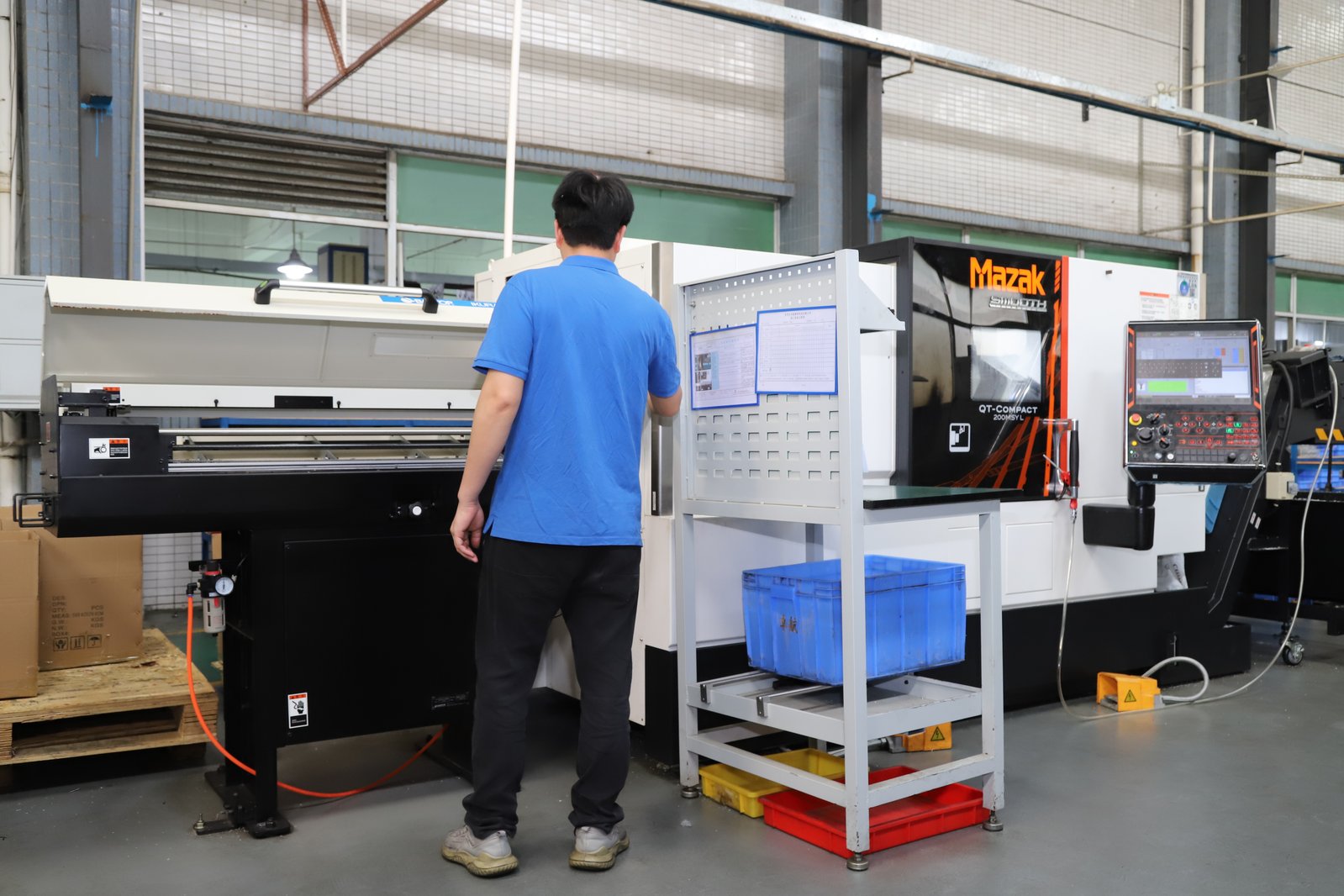
Choosing a China machining factory from another continent sounds like the riskiest purchase a small buyer makes, but the risk concentrates in a few verifiable places: is the entity real, is the quality system real, can the floor actually hold the tolerance, and will the commercial terms protect you if something fails. Each of those can be checked online in minutes when you know what to ask for. This guide is a 30-minute screening routine — four passes, roughly seven minutes each — that separates a factory worth a test order from one worth avoiding, before you send a model, a deposit, or a commitment.
What is the goal of a 30-minute screen, and what it is not?
A 30-minute online screen is not a substitute for an audit or a factory visit. Its job is narrower: to remove the suppliers whose risk is visible from the outside, and to rank the survivors so your first order goes to the strongest candidate. The screen works because most supplier failures are visible in documents before they are visible in parts — the wrong entity name, the unverifiable certificate, the capability page that contradicts the quality page, the quote that promises tolerances the shop's own claims do not support.
Structure the time instead of free-styling it. Pass one verifies the entity. Pass two verifies the quality system and its claims. Pass three verifies machining capability through evidence rather than adjectives. Pass four locks the commercial terms. At the end of 30 minutes you either have a short list and a test-order plan, or you have found the reason to walk away, and both are valuable outcomes. The suppliers that pass all four passes are rare enough that the discipline pays for itself on the first order.
Pass one: is the entity real, and is it the factory you are quoted by?
The single most common failure in China machining sourcing is buying from a different entity than you think you are buying from. The check is mechanical. Ask for the legal entity name, the business registration number, and the registered address, then compare them across every document you receive: the quote, the pro forma invoice, the bank details, and the website. If the name on the website is a brand and the name on the invoice is a different registered company, that is not necessarily fraud — brands often sit on top of legal entities — but it means the company you will pay is not the company you think you are dealing with, and that needs to be explained before money moves.
Verify the registration number independently. Chinese business registrations are public, and the number can be checked against the registry. Then apply the same consistency test to the address: a factory's registered address should match a real industrial location, and a supplier that gives a business-center address for a company claiming to run a machine shop is describing itself inaccurately at best. The final confirmation is live: request a video call showing the machines running, the floor, and the operator. A factory can film its own floor on demand; a trading company cannot, and its hesitation is the answer. The FAQs page covers how a factory demonstrates its identity and evidence to remote buyers.
Pass two: which quality claims are real, and which can you check?
Quality claims are only useful when they are verifiable, and the verification is faster than most buyers assume. Ask for the certificates the supplier claims — ISO 9001:2015 for the quality system, IATF 16949:2016 where automotive work is involved, ISO 14001:2015 for environmental management — and ask for the certificate images with their numbers. Certificate numbers are registered with their issuers and registrars, and a genuine certificate can be traced; a number that does not resolve, or an image that changes between requests, is a disqualifying answer.
Beyond the certificates, probe the scope. A certificate names what it covers, and the scope line matters more than the logo: a quality certificate whose scope excludes product design tells you the supplier is a build-to-print shop, which is exactly what a machining buyer wants to hear stated honestly. Ask what the supplier does not hold as well as what it does, because an answer that names the boundaries is more trustworthy than one that claims everything. And ask how the quality system shows up on a lot: what documents ship with the parts, how non-conformances are isolated, and whether material is verified on incoming. The quality page shows the inspection, material-verification, and reporting structure a qualified factory operates, which is a concrete benchmark for the evidence you request.
Pass three: how do you judge machining capability without standing on the floor?
Capability is judged by evidence, not by the machine list on a website. The three documents that tell you what a factory actually ships are: a sample dimensional report from a past lot, showing measured values against drawing callouts rather than a column of pass; a sample material record, showing the incoming certificate and verification for a real lot; and a tolerance statement that is consistent with the quality page and the FAQ. When a supplier's tolerance claims, its quality page, and its sample reports all agree, the system is coherent; when they contradict each other, the contradiction is the finding.
Ask what the factory holds in normal production — the realistic answer for precision machining is ±0.003 mm for milling and turning and ±0.002 mm for grinding, with capability on key characteristics at Cpk 1.67 or higher — and ask how that is evidenced on a past lot. Then ask about the parts it runs that resemble yours: similar materials, similar tolerances, similar batch sizes. A factory that can point to a past part in your alloy with your tolerance class and show its report is a factory that has solved your problem before. The services overview and the machined-parts guide describe the process range and material coverage to probe against.
What should the first order look like when a supplier survives the screen?
When a supplier passes the four-pass screen, the next step is not a production order — it is a first article. Order a single part or a small batch, machined to your drawing with full documentation, and ship it by courier rather than consolidating it into a sea-freight batch. The first article costs little and answers everything the screen could not: it proves the material record, the dimensional evidence, and the paperwork discipline on one part that you can measure on your own equipment.
Treat the first article as a test of the whole chain, not just the part. Measure the critical dimensions with the same class of instrument the dimensional report names and compare the numbers. Check that the material certificate names the grade and condition you specified and that the incoming verification record ties to it. Confirm the surface finish against the drawing's callouts. If the first article matches its paperwork, the factory's system is real and volume is a scaling question, not a trust question. If it drifts, you have learned it for the price of one part instead of one container.
Which red flags should end the screening immediately?
Some findings are terminal, and recognizing them saves more than any negotiation. The first is an identity that shifts: a legal name that changes between the quote and the invoice, or bank details in a name that does not match the registered entity. The second is refusal of verification: a supplier that will not do a video call, will not share a certificate number, or will not show a sample report is describing a capability it cannot demonstrate. The third is claim inflation: quality claims without verifiable numbers, tolerance promises beyond what precision machining holds, or turnaround promises that ignore the process steps the part needs.
The commercial red flags are just as terminal. Pressure to pay in full before any work, payment to a personal account, or terms that concentrate all risk on the buyer are not negotiation points — they are the pattern of suppliers who do not intend to be found. A factory that has survived years of export orders does not need to structure a first order like a one-way bet. When several red flags appear together, end the conversation cleanly and move to the next candidate; the 30-minute screen has done its job.
Keep the screen repeatable by archiving what you collected. Save the registration number and the certificate numbers with their request dates, the quote with its incoterm, and the answers to the capability questions, each in the supplier file. When the test order arrives, that archive becomes the baseline: the certificate numbers on the packing list should match the ones you verified, the incoterm on the invoice should match the quote, and the dimensional report should match the format you were shown. A supplier file with evidence in it turns the next re-order into a five-minute refresh instead of a second 30-minute screen, and it gives you a defensible record if a supplier ever needs to be replaced mid-program.
How do you rank the survivors instead of picking a favorite?
When several suppliers survive the four passes, ranking them needs a scorecard rather than a gut call, because the differences that matter are spread across the evidence you have just collected. Build the scorecard from the screen itself, with weightings that match your order. Entity verification is binary and disqualifying — any inconsistency ends the candidate regardless of score. Quality-system verification is near-binary: certificates traceable to their registrars pass, untraceable claims fail. The scoring spread then comes from capability evidence and commercial terms, which is where candidates genuinely separate.
On capability, score the evidence against your specific part rather than against a generic ideal. A candidate with a sample report in your alloy, at your tolerance class, with your documentation set is worth more than one with an impressive machine list and no comparable past work. Score the tolerance claim for realism — precision machining holds ±0.003 mm in milling and turning and ±0.002 mm in grinding, so a quote promising tighter on a milled surface without a grinding operation is describing something it cannot deliver. Score the documentation answer on whether the supplier names the actual records that ship — the material certificate, the dimensional report, the process evidence — rather than answering "full documentation."
On commercial terms, score the risk balance. A deposit with balance before shipment or against the bill of lading is standard and reasonable; full prepayment from an unproven supplier is a risk you are funding. An incoterm that is named on the quote is better than one left implicit, and a supplier that states its revision and change policy in writing is easier to schedule against than one that improvises. Add the softer signals you collected during the screen — response quality, whether technical questions were answered directly or deflected, whether the named contact stayed consistent — because those predict how the order will feel when something goes wrong. Sum the scores, take the top candidate to a first article, and keep the runner-up warm; the first article is where the ranking gets confirmed or corrected.
What belongs in the commercial check before you commit?
The commercial terms are the last pass, and they protect the relationship after the technical screen has cleared the supplier. The order document should name the drawing revision and its issue date, the material grade and condition, the quantity, and the incoterm, because a price without an incoterm is not a price, and a revision without a date is not a specification. Agree in writing what triggers a re-quote, usually any drawing revision after the order is placed, and agree the first-article approval step and its timeline before production starts.
Payment terms follow the risk profile of the order. The standard structure for a first order is a deposit with the balance before shipment or against the bill of lading, which aligns the supplier's incentive with delivery. Terms that require full prepayment from an unproven supplier, or that shift inspection risk entirely to the buyer, should be negotiated before any money moves. The commercial check closes the loop that the technical screen opened: the entity is verified, the quality system is real, the capability is evidenced, and the terms are fair. A supplier that passes all four is worth a first article; the first article decides the rest. The contact page is where a buyer starts that process with a real drawing and a real quantity.
Frequently Asked Questions
Can a China machining factory be vetted online without a visit?
Yes, to a useful depth. The entity can be checked against the business registry, certificates against their registrars, capability against documented past lots, and a live video call confirms the floor is real. A visit adds confidence later; the 30-minute screen removes the obvious risks first.
How do I confirm a supplier is a factory and not a trading company?
Match the legal name across the registration, the invoice, and the address, then request a live video call of the machines running. A factory shows the same name in all three places and films its floor on demand; a trading company usually cannot.
Which quality certificates should I ask to see?
ISO 9001:2015 for the quality system, plus IATF 16949:2016 where automotive work is involved and ISO 14001:2015 for environmental management. Ask for the certificate images with numbers and check the numbers with the registrar — a real certificate verifies; a doctored number does not.
What capability evidence should I request before a test order?
A sample dimensional report and material record from a past lot, the tolerance the factory holds in normal production, and the materials and finishes it runs. Those documents show what an actual lot ships with, which beats a page of claimed capabilities.
What should the first order with a new supplier look like?
A single first article or small batch, machined with full documentation and shipped by courier. Measure the critical dimensions on your own equipment and compare them to the dimensional report before committing to volume. That one part is the cheapest qualification available.
Which red flags should end the screening immediately?
A legal name that changes between the quote and the invoice, pressure to pay outside normal terms, refusal of a video call, quality claims without verifiable certificate numbers, and impossible tolerance promises at suspicious prices. Any one of these ends the conversation.
What payment and contract terms protect a remote buyer?
A deposit with the balance against the bill of lading or before shipment, an order naming the revision, material, quantity, and incoterm, and a written agreement on what triggers a re-quote. Terms that shift all risk to the buyer are the last screen to apply.
Working through the supplier screen and need a factory that can show the evidence?
Write to [email protected] or call +86 13126536955 — the registration, certificates, and sample reports are provided up front, before any commitment.