
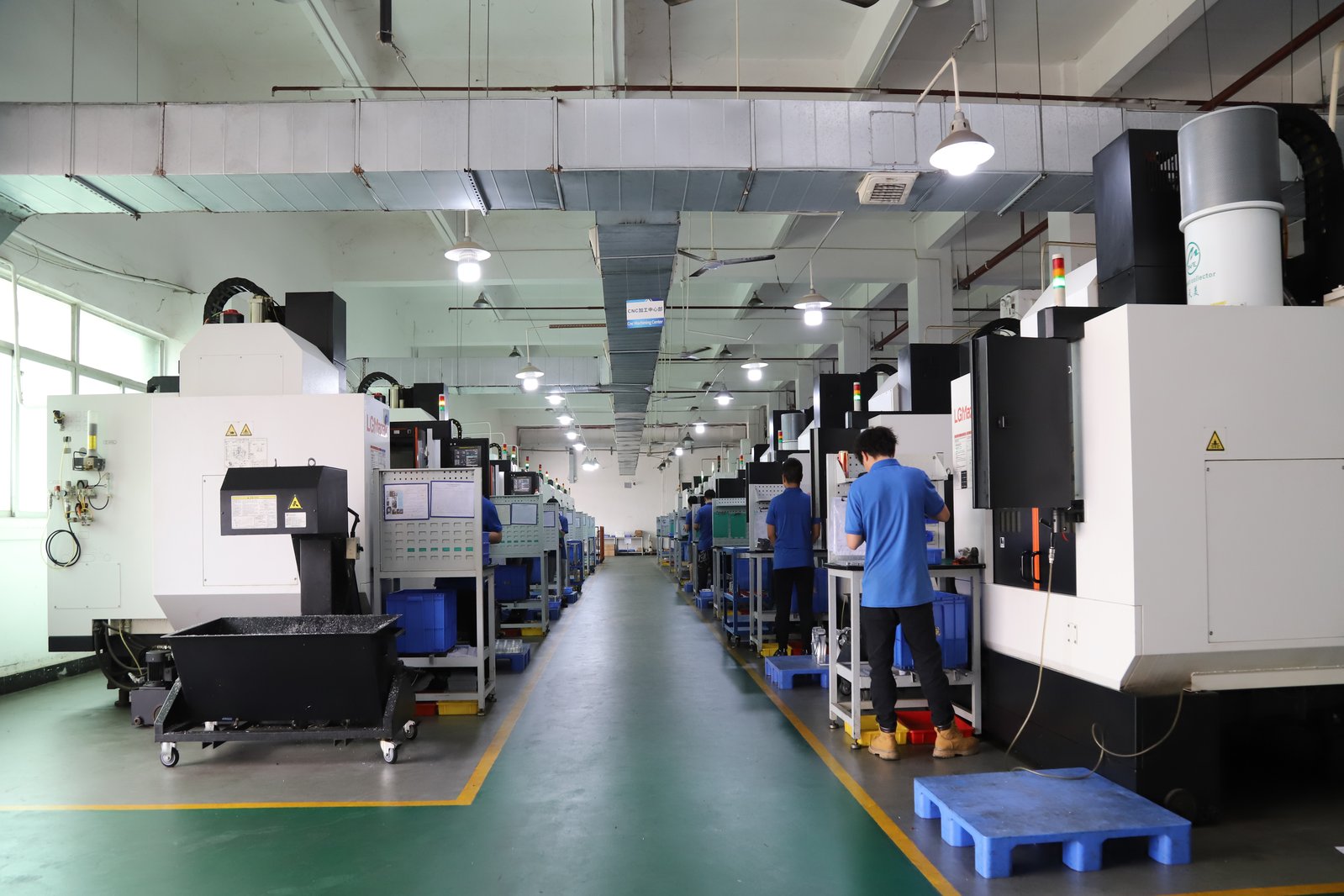
Every machined part started as a candidate for another process. The bracket could have been die-cast, the housing injection-molded, the load-bearing fitting forged, the complex core 3D-printed. Most of the time the buyer never seriously compares them, because the part has always been made one way, but the volume, the tolerances, or the material may have changed since the last decision. This guide compares CNC machining with its main alternatives on the criteria that actually decide the question — quantity, tooling cost, tolerance, material, and lead time — and gives a buyer the framework to make the call before approaching a China machining factory or any other supplier.
Why compare processes at all, and where does machining sit?
Process selection matters because it is a decision that compounds. Once a part is cast or forged, the tooling cost locks the process in for the life of the program; once it is machined, every new drawing revision is nearly free to implement. Getting the process wrong at the start means paying for the wrong tooling, the wrong tolerances, or the wrong material form for years. The comparison therefore belongs before the supplier search, not during it — a machining factory quotes the machining option, but it cannot quote the decision for you.
CNC machining occupies a specific position in the process landscape. It cuts material away from a solid block or bar, which means it starts with the best material properties available — wrought bar stock rather than cast or sintered material — and it can hold tolerances and produce geometry that no net-shape process matches. Its weakness is the opposite of its strength: it removes material instead of forming it, so at very high volume, where a mold or die can be amortized across tens of thousands of parts, the per-part economics of casting or molding can overtake it. The decision between machining and its alternatives is therefore usually a decision about volume and geometry, with material as the tiebreaker.
What does CNC machining do best, and where do its limits sit?
Machining wins a specific and wide band of the part spectrum. It is the right process when any of these hold:
- Tolerance matters. Fit and alignment features at ±0.003 mm, geometric callouts, and datum control are machined surfaces — no casting, forging, or molding process holds them directly.
- Volume is low to medium. With no mold or die to build, a machined part is economical from one piece to thousands, and design changes cost only a program edit.
- Material choice is wide. Machining runs from aluminum and stainless through titanium, Inconel, and engineering plastics from the same bar-stock supply chain.
- The part must be strong. Wrought bar stock carries the full strength of the alloy in every direction, unlike cast material with its porosity and grain issues.
Its limits are equally clear. Machining cannot economically produce a complex internal cavity that no cutter can reach, it generates material waste that matters at scale, and its per-part cost barely falls with volume, so at very high quantities a net-shape process eventually wins. Knowing where those limits sit is what makes the alternatives comparison honest rather than promotional.
When does casting or forging beat machining, and when do they combine with it?
Casting and forging are net-shape processes: they form the part close to final geometry, then leave functional faces for machining. Casting — die casting for aluminum and zinc, investment casting for stainless and superalloys — wins when the volume is high enough to amortize the tooling and the geometry suits the process. Complex internal cavities, thin walls, and organic shapes that would waste huge amounts of bar stock are casting's territory. Forging wins when the part carries high service loads, because forging refines the grain and aligns it with the part shape, improving strength and fatigue life over machined-from-bar material in the same alloy.
The nuance buyers miss is that these processes rarely compete with machining head-on; they feed it. A die-cast housing still gets its mounting faces, bores, and sealing surfaces machined. A forged connecting rod is forged to near-net and then machined on every critical surface. The real decision is not machining versus casting — it is whether the blank should be a bar, a casting, or a forging before the machining starts. At low volume the bar wins because there is no tooling; at high volume the casting or forging wins on material and cycle time; and the machined features are the constant in both.
When does injection molding or sheet metal take the part instead?
Plastic parts often have a genuine choice between machining and injection molding. Molding wins at volume: once the tool exists, cycle times are seconds and per-part cost is tiny. It also produces features machining cannot — snap fits, living hinges, and thin-wall geometries tuned for plastic. Machining wins at low volume, when the part must be made from a plastic that is not practical to mold, when the quantities do not justify a tool, or when tight tolerance and structural reliability matter more than cost. Engineering plastics such as PEEK and other high-spec polymers are frequently machined precisely because their cost and small volumes make molding uneconomic.
Sheet metal is a different fork in the road. If the part is essentially flat with bends and holes — a bracket, a cover, a chassis panel — sheet metal fabrication beats machining on material utilization and cycle time at almost any volume. The moment the part gains machined features, thick sections, or tight-tolerance bores, machining returns. The telling sign for a buyer is material thickness and geometry: a 3 mm plate with holes is sheet metal work; a 30 mm block with threaded bores and datum faces is machining. Ordering sheet metal work from a machining factory is usually the wrong call, and vice versa.
Where does 3D printing actually fit in the decision?
Additive manufacturing gets the most attention and fits the narrowest production role. Its genuine strengths are geometry no cutter can produce — internal conformal channels, lattice structures, one-off organic forms — and speed to a physical part without tooling. Those make it a strong prototyping tool and a legitimate production process for specialized geometries. Its weaknesses are equally real: printed metal is more expensive per part than machined metal at any meaningful volume, its surface finish and tolerance need machining on functional faces anyway, and the material properties depend on the process and post-treatment.
The honest frame for a buyer is that additive and machining are complements, not rivals. A 3D-printed prototype validates geometry before the machined version is quoted. A printed core with internal channels gets its sealing faces machined. The decision point is rarely "print or machine the whole part" — it is which features each process owns. When the geometry is machinable and the volume is real, machining is the production answer, and printing the prototype does not change that.
Which material decides the process, and how?
Material is the tiebreaker that ends most process debates, because every process has a material range and every alloy has a preferred form. Aluminum machines, die-casts, and forges well, so quantity decides. Stainless and superalloys such as Inconel 718 machine reliably but cast or forge only through specialized routes with long lead times, so bar-stock machining wins for most volumes. High-spec alloys that exist only as wrought bar or plate — certain aerospace tempers, for example — can be machined and nothing else. On the plastic side, a part in a commodity plastic like ABS or nylon leans toward molding at volume, while a part in PEEK or a filled polymer may only be practical to machine.
The buyer's rule is to start from the material the part must be, then ask which processes can even make it in that material. That single filter removes most of the theoretical alternatives: if the drawing calls for 7075-T6 aluminum with tight bores, the process conversation is machining, with casting only if the quantity is enormous and the critical features stay machined. Material grade, condition, and the form it is available in should be named before any process comparison, because comparing processes on a material that half of them cannot use is wasted effort.
How do the economics compare on the criteria that matter?
The table below compares the processes on the six criteria that settle most decisions. The intent is directional, not a price list — real numbers depend on the specific geometry and quantity.
| Criterion | CNC machining | Casting | Forging | Injection molding | 3D printing |
|---|---|---|---|---|---|
| Best quantity | 1 to mid-volume | High volume | Mid to high volume | High volume | 1 to low volume |
| Tooling cost | Low (fixtures only) | High (molds/dies) | High (dies) | High (tool) | None |
| Tolerance | Highest (±0.003 mm) | Loose; machined after | Loose; machined after | Moderate | Moderate; machined after |
| Material range | Very wide | Castable alloys only | Forgeable alloys only | Thermoplastics | Print-capable alloys/polymers |
| Geometry freedom | Good; limits on internal cavities | Good for cavities | Limited by die | Best for plastic features | Best overall |
| Lead time to first part | Shortest | Long (tooling) | Long (tooling) | Long (tool) | Short for one part |
Read the table as a filter, not a verdict. Machining wins the tolerance, material, and lead-time columns outright and is competitive on tooling; it loses the very-high-volume economics to casting and molding. For a buyer sourcing from a China machining factory, the practical implication is that the factory's value concentrates exactly where machining wins — precision, material variety, no-tooling flexibility, and short first-part lead time — and that parts which belong to casting or molding should be sourced there, not forced onto a mill.
Two dynamics do not show up in the table but often decide the real choice. The first is iteration cost. A machined part can absorb a drawing revision between batches at the cost of a program edit and a re-quote; a cast or molded part absorbs a design change only by paying for a new or modified tool, which takes weeks and carries its own risk. For products still evolving — and most products are — the option value of staying machined is real money, and it argues for delaying the tooling commitment until the design is genuinely stable. The second is the volume crossover. The exact quantity at which a net-shape process overtakes machining varies with part size, material, and tooling cost, but for many aluminum and plastic parts it sits in the tens of thousands of units per year, and for stainless and titanium parts, where the tooling is more expensive and the material saving is smaller, it can sit far higher. A buyer who has not modeled the crossover is usually better off machining, because the risk of paying for unused tooling is greater than the risk of paying marginally more per part at a quantity that has not been reached.
How should a buyer work through the decision on a real part?
Work through the decision in order. First, name the material the part must be, with its condition. Second, filter the processes to those that can make that material. Third, compare the survivors on quantity and tooling — if the volume will not amortize a mold or die, the net-shape options drop out and machining is the default. Fourth, check the geometry: features a cutter cannot reach, or thin-wall plastic details, point to a forming process or additive. Fifth, look at the tolerance block: any critical dimension at ±0.003 mm or a geometric callout means machined surfaces no matter how the blank is made.
When the decision is genuinely close — the part could be machined now and cast at volume later — the standard move is to prototype in machined form. A machined prototype validates geometry, fit, and function in the real material before any tooling is committed, and the lessons from it inform the cast or molded design. Ordering a small machined batch while a mold is in progress is common practice for exactly that reason. The machined-parts guide shows the geometry and material range a machining supplier covers, and the services overview explains how machining, finishing, and inspection combine into one order when the process decision lands on machining.
Frequently Asked Questions
When is CNC machining the right process for a part?
Machining wins when the part needs tight tolerances, a wide material choice, or low-to-mid volume without tooling cost. It also wins when the alloy exists only as bar stock. Casting, molding, and forging need volume to justify their tooling, and printed metal is more expensive per part at any real quantity.
When does casting beat machining?
Casting wins at high volume where tooling amortizes, and for complex internal cavities a cutter cannot reach. Die casting suits aluminum and zinc; investment casting suits stainless and superalloys. Most castings still need machining on functional faces, so the two processes usually combine.
When does forging beat machining?
Forging wins when the part carries high service loads, because it refines grain structure and improves strength and fatigue life. At low volume the die cost is hard to justify, and machined-from-bar parts are often the cheaper route to the same mechanical result.
Is 3D printing a replacement for machining?
Rarely a direct one. Additive suits complex internal channels and one-off geometry, and works as a fast prototyping tool. Production parts usually need machined functional faces anyway, and printed metal is more expensive per part at any real volume.
Which process has the lowest tooling cost?
CNC machining, because it needs only fixturing and standard tooling rather than a dedicated mold or die. That is why machining is economical at low and medium volume, and why design changes cost little when nothing is locked into a permanent tool.
Can a cast or forged part meet machined tolerances?
No. Casting and forging hold loose dimensional tolerances and are always followed by machining on functional faces. Critical dimensions at ±0.003 mm or geometric callouts mean those surfaces are machined regardless of how the blank was made.
How should a buyer decide when several processes could work?
Compare on quantity, tooling, tolerance, material, and lead time — the real drivers. When volume does not clearly justify tooling, machining is the low-risk default, and prototyping in machined form before committing to a mold or die is almost always the cheapest way to learn.
Not sure whether your part should be machined, cast, forged, or printed?
Send the model and annual volume to [email protected] or call +86 13126536955, and the recommendation will separate the process decision from the supplier decision.